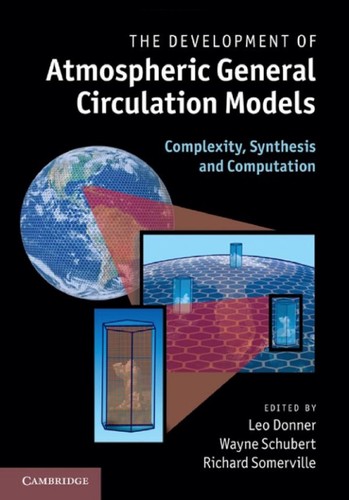
The Development of Atmospheric General Circulation Models
0
0
As an Amazon Associate and affiliate partner, Menrva Books earns from qualifying purchases. Learn more
Author Description
Presenting a comprehensive discussion of general circulation models of the atmosphere, this book covers their historical and contemporary development, their societal context, and current efforts to integrate these models into wider earth-system models. Leading researchers provide unique perspectives on the scientific breakthroughs, overarching themes, critical applications, and future prospects for atmospheric general circulation models. Key interdisciplinary links to other subject areas such as chemistry, oceanography and ecology are also highlighted. This book is a core reference for academic researchers and professionals involved in atmospheric physics, meteorology and climate science, and can be used as a resource for graduate-level courses in climate modeling and numerical weather prediction. Given the critical role that atmospheric general circulation models are playing in the intense public discourse on climate change, it is also a valuable resource for policy makers and all those concerned with the scientific basis for the ongoing public-policy debate The aim of this volume is to describe the development of atmospheric general circulation models. We are motivated to do so by the central and essential role of these models in understanding, simulating, and predicting the atmosphere on a wide range of time scales. While atmospheric general circulation models are an important basis for many societal decisions, from responses to changing weather to deliberations on responding to anthropogenic climate change, the scientific basis for these models, and how they have come about and continue to develop, are not widely known. Our objective in editing this volume is to provide a perspective on these matters
Menrva's Summary
THE THESIS
This book chronicles the evolution of atmospheric general circulation models (GCMs) and their critical role in understanding Earth's climate. It details their historical development, contemporary advancements, and integration into broader Earth-system models, drawing on insights from leading researchers. The work highlights scientific breakthroughs, key applications, and future prospects, while also exploring interdisciplinary connections to chemistry, oceanography, and ecology. The authors aim to illuminate the scientific underpinnings of GCMs for researchers, professionals, and policymakers grappling with climate change discourse.
THE SCOPE MAP
- Historical development of atmospheric general circulation models
- Contemporary advancements and scientific breakthroughs in GCMs
- Integration of GCMs into wider Earth-system models
- Societal context and applications of GCMs
- Future prospects and research directions for GCMs
- Interdisciplinary links to chemistry, oceanography, and ecology
- Core reference for researchers and professionals in atmospheric physics, meteorology, and climate science
- Resource for graduate-level courses in climate modeling and numerical weather prediction
THE AUTHORITY PERSPECTIVE
This volume is positioned as a core reference for academic researchers and professionals in atmospheric physics, meteorology, and climate science, and is also suitable for graduate courses. Its detailed exploration of GCM development and applications makes it a valuable resource for understanding the scientific basis of climate change discussions. The perspectives offered by leading researchers aim to provide a comprehensive overview of the field's past, present, and future. The book is intended to bridge the gap between the complex scientific models and the broader public and policy discourse surrounding climate change.
Page Count:
255
Publication Date:
2011-01-01
ISBN-10:
0521190061
ISBN-13:
9780521190060
Science
Non-Fiction
Meteorology
Atmospheric Physics
Community Tags
Similar Books