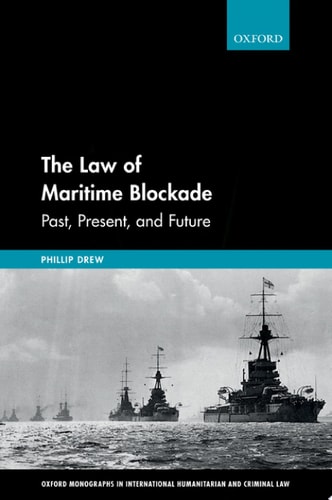
The Law of Maritime Blockade: Past, Present, and Future
0
0
As an Amazon Associate and affiliate partner, Menrva Books earns from qualifying purchases. Learn more
Author Description
Although appearing to be a relatively benign method of warfare when viewed from a distance, a close examination of maritime blockade unveils a sinister character that can, in cases where countries are highly reliant on imports of foodstuffs to feed their populations, prove incredibly deadly, particularly for the young and elderly. This book is unique in that it is the only contemporary book that is dedicated to the study of the law of maritime blockade in the context of modern humanitarian law.Reviewing the development of blockade law over the past four centuries, The Law of Maritime Blockade provides a historical analysis of the law as it emerged, tracing its evolution through armed conflicts between 1684 and the present. Referring to the starvation caused by the blockade of Germany during World War I and the humanitarian crisis caused by the sanctions regime against Iraq (1991-2003), this book demonstrates that blockade can have extremely deleterious effects for vulnerable civilian populations. In this context the current law of blockade is examined, and found to be deficient in terms of its protection for civilians. Recognizing and advocating that blockade should remain as a valid and effective method of warfare, the book offers a template for a modern law of blockade maritime blockade that incorporates many of the traditional aspects of the law, while reducing the possibilities that blockades can cause or exacerbate humanitarian disasters.
Menrva's Summary
THE THESIS
This book investigates the legal framework governing maritime blockades, questioning whether current international humanitarian law provides sufficient protection for civilian populations against the starvation and deprivation often caused by such tactics. Phillip Drew, an expert in international humanitarian and criminal law, utilizes a comprehensive historical analysis of naval warfare spanning from 1684 to the present day. By examining specific case studies, including the blockade of Germany during World War I and the sanctions against Iraq, he argues that the existing legal structure is deficient and requires modernization to mitigate humanitarian disasters while maintaining the blockade as a valid method of warfare.
THE SCOPE MAP
What You Will Find
- A historical survey of blockade law evolution over four centuries of armed conflict.
- A critical analysis of the humanitarian impact of blockades on vulnerable populations, specifically the young and elderly.
- A proposed legal template for modernizing blockade regulations to balance military efficacy with civilian protection.
- Case studies of major historical blockades and their long-term humanitarian consequences.
THE AUTHORITY PERSPECTIVE
Legal scholars and military historians recognize this work as a foundational text for understanding the intersection of naval strategy and humanitarian obligations. Readers frequently note the academic density of the prose, which provides a rigorous examination of a niche but critical area of international law.
Page Count:
210
Publication Date:
2018-02-14
Publisher:
Oxford University Press
ISBN-10:
0198808437
ISBN-13:
9780198808435
Blockade
Professional Career & Trade
Warfare
Military History
Maritime law
International Law
Community Tags
Similar Books