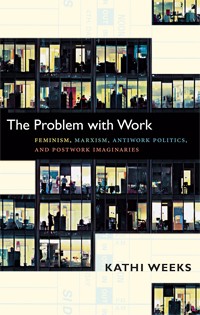
The Problem With Work
0
0
As an Amazon Associate and affiliate partner, Menrva Books earns from qualifying purchases. Learn more
Author Description
In The Problem with Work, Kathi Weeks boldly challenges the presupposition that work, or waged labor, is inherently a social and political good. While progressive political movements, including the Marxist and feminist movements, have fought for equal pay, better work conditions, and the recognition of unpaid work as a valued form of labor, even they have tended to accept work as a naturalized or inevitable activity. Weeks argues that in taking work as a given, we have “depoliticized” it, or removed it from the realm of political critique. Employment is now largely privatized, and work-based activism in the United States has atrophied. We have accepted waged work as the primary mechanism for income distribution, as an ethical obligation, and as a means of defining ourselves and others as social and political subjects. Taking up Marxist and feminist critiques, Weeks proposes a postwork society that would allow people to be productive and creative rather than relentlessly bound to the employment relation. Work, she contends, is a legitimate, even crucial, subject for political theory.
Menrva's Summary
THE THESIS
This book challenges the fundamental assumption that waged labor is inherently beneficial and questions the political and social good of work itself. Kathi Weeks argues that by accepting work as a given, we have removed it from critical political discourse, leading to its privatization and the decline of work-based activism. She contends that society has normalized waged work as the primary means of income distribution, an ethical duty, and a basis for personal and social identity. The book proposes a postwork society where individuals can pursue productivity and creativity beyond the constraints of employment.
THE SCOPE MAP
- Critique of the presupposition that waged labor is a social and political good.
- Analysis of how progressive movements have accepted work as naturalized or inevitable.
- Argument for the 'depoliticization' of work through its privatization.
- Examination of the atrophy of work-based activism in the United States.
- Discussion of waged work as the primary mechanism for income distribution.
- Exploration of work as an ethical obligation and a means of self-definition.
- Proposal for a postwork society that prioritizes productivity and creativity.
- Assertion that work is a legitimate and crucial subject for political theory.
THE AUTHORITY PERSPECTIVE
The book is recognized for its bold challenge to the conventional understanding of work and its role in society. It engages with Marxist and feminist critiques to advocate for a reevaluation of our relationship with labor. The work is seen as a significant contribution to political theory, urging a move towards a postwork society that allows for greater individual fulfillment beyond employment. Its arguments are likely to resonate with those interested in labor rights, feminist economics, and critiques of capitalism.
Page Count:
287
Publication Date:
2011-01-01
ISBN-10:
0822350963
ISBN-13:
9780822350965
Non-Fiction
Economics
Politics
Social Science
Labor Studies
Feminist Theory
Community Tags
Similar Books