Tomb Robberies at the End of the New Kingdom: The Fayum Case - The Gurob Burnt Groups Reinterpreted
0
0
As an Amazon Associate and affiliate partner, Menrva Books earns from qualifying purchases. Learn more
Author Description
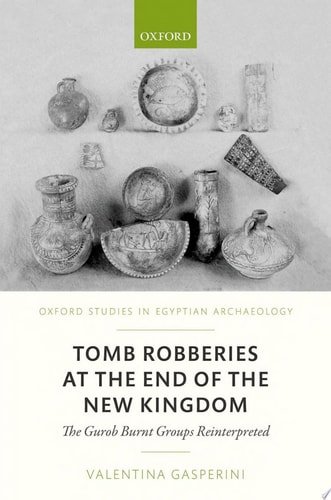
At the end of the 19th century W.M.F. Petrie excavated a series of assemblages at the New Kingdom Fayum site of Gurob. These deposits, known in the Egyptological literature as 'Burnt Groups', were composed by several and varied materials (mainly Egyptian and imported pottery, faience, stone and wood vessels, jewellery), all deliberately burnt and buried in the harem palace area of the settlement. Since their discovery these deposits have been considered peculiar and unparalleled. Many scholars were challenged by them and different theories were formulated to explain these enigmatic 'Burnt Groups'.The materials excavated from these assemblages are now curated at several Museum collections across England: Ashmolean Museum, British Museum, Manchester Museum, and Petrie Museum. For the first time since their discovery, this book presents these materials all together. Gasperini has studied and visually analysed all the items. This research sheds new light on the chronology of deposition of these assemblages, additionally a new interpretation of their nature, primary deposition, and function is presented in the conclusive chapter. The current study also gives new information on the abandonment of the Gurob settlement and adds new social perspective on a crucial phase of the ancient Egyptian history: the transition between the late New Kingdom and the early Third Intermediate Period. Beside the traditional archaeological sources, literary evidence ('The Great Tomb Robberies Papyri') is taken into account to formulate a new theory on the deposition of these assemblages.
Menrva's Summary
THE THESIS
This study investigates the enigmatic 'Burnt Groups' discovered at the New Kingdom site of Gurob to determine their original function and the circumstances surrounding their deposition. Valentina Gasperini, an expert in Egyptian archaeology, synthesizes material evidence from multiple museum collections with historical literary sources to challenge long-standing academic theories. By re-examining the physical assemblages alongside the 'Great Tomb Robberies Papyri,' the author constructs a new framework for understanding the abandonment of the Gurob settlement during the transition from the New Kingdom to the Third Intermediate Period.
THE SCOPE MAP
What You Will Find
- Comprehensive analysis of material assemblages including imported pottery, faience, stone vessels, and jewellery.
- A comparative study of artifacts curated across the Ashmolean, British, Manchester, and Petrie Museums.
- Integration of archaeological data with textual evidence from the 'Great Tomb Robberies Papyri.'
- A re-evaluation of the social and historical context regarding the decline of the New Kingdom harem palace.
THE AUTHORITY PERSPECTIVE
Experts recognize this work as a significant contribution to the study of New Kingdom material culture and site abandonment patterns. Scholars frequently note the meticulous nature of Gasperini's visual analysis, which provides a necessary update to the foundational research conducted by W.M.F. Petrie.
Page Count:
352
Publication Date:
2018-08-28
Publisher:
Oxford University Press
ISBN-10:
0198818785
ISBN-13:
9780198818786
History
Anthropology
Ancient Egypt
Academic
Archaeology
Egypt
Funeral Rites
Tombs
Middle East
Community Tags
Similar Books