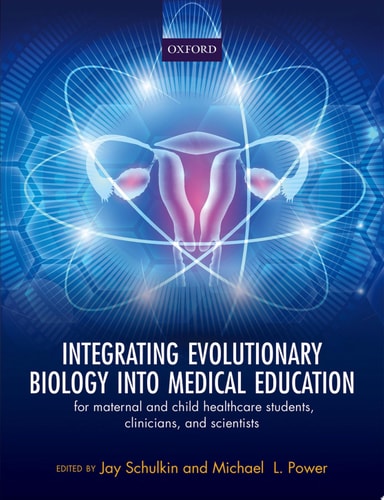
Integrating Evolutionary Biology into Medical Education: For Maternal and Child Healthcare Students, Clinicians, and Scientists
0
0
As an Amazon Associate and affiliate partner, Menrva Books earns from qualifying purchases. Learn more
Author Description
Clinicians and scientists are increasingly recognising the importance of an evolutionary perspective in studying the aetiology, prevention, and treatment of human disease; the growing prominence of genetics in medicine is further adding to the interest in evolutionary medicine. In spite of this, too few medical students or residents study evolution.This book builds a compelling case for integrating evolutionary biology into undergraduate and postgraduate medical education, as well as its intrinsic value to medicine. Chapter by chapter, the authors - experts in anthropology, biology, ecology, physiology, public health, and various disciplines of medicine - present the rationale for clinically-relevant evolutionary thinking. They achieve this within the broader context of medicine but through the focused lens of maternal and child health, with an emphasis on female reproduction and the early-life biochemical, immunological, and microbial responses influenced by evolution.The tightly woven and accessible narrative illustrates how a medical education that considers evolved traits can deepen our understanding of the complexities of the human body, variability in health, susceptibility to disease, and ultimately help guide treatment, prevention, and public health policy. However, integrating evolutionary biology into medical education continues to face several roadblocks. The medical curriculum is already replete with complex subjects and a long period of training. The addition of an evolutionary perspective to this curriculum would certainly seem daunting, and many medical educators express concern over potential controversy if evolution is introduced into the curriculum of their schools. Medical education urgently needs strategies and teaching aids to lower the barriers to incorporating evolution into medical training.In summary, this call to arms makes a strong case for incorporating evolutionary thinking early in medical training to help guide the types of critical qu
Menrva's Summary
THE THESIS
How can medical education be improved by integrating evolutionary biology to better address the complexities of human health and disease? Jay Schulkin and Michael Power, both established experts in anthropology and physiology, argue that current medical training suffers from a lack of evolutionary context. They present a framework for incorporating evolutionary principles into medical curricula, specifically focusing on maternal and child health to demonstrate the practical clinical utility of this perspective.
THE SCOPE MAP
What You Will Find
- Analysis of evolutionary influences on female reproduction and early-life development.
- Examination of biochemical, immunological, and microbial responses through an evolutionary lens.
- Strategies for overcoming institutional and curricular barriers to teaching evolutionary medicine.
- Discussion on how evolved traits inform the understanding of disease susceptibility and public health policy.
THE AUTHORITY PERSPECTIVE
Experts and educators view this text as a necessary intervention for modernizing medical training. Readers frequently note that the authors provide a pragmatic approach to a complex pedagogical challenge, making it a useful resource for those seeking to bridge the gap between evolutionary theory and clinical practice.
Page Count:
272
Publication Date:
2020-02-24
Publisher:
Oxford University Press
ISBN-10:
0198814151
ISBN-13:
9780198814153
Science
Maternal Health
Medical
Public Health
Evolutionary Biology
Education
Evolution
Community Tags
Similar Books



Reader Comments
Share Your Thoughts
No comments yet. Be the first to share your thoughts!