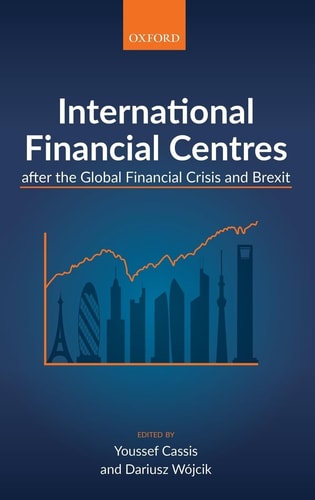
International Financial Centres after the Global Financial Crisis and Brexit
0
0
As an Amazon Associate and affiliate partner, Menrva Books earns from qualifying purchases. Learn more
Author Description
As well as marking the tenth anniversary of the collapse of Lehman Brothers and the consequent unleashing of the global financial crisis, 2018 is also the year of negotiations on the terms of the UK's exit from the European Union. Within a decade the banking world has witnessed two epochal events with potential to redraw the map of international financial centres: but how much has this map actually changed since 2008, and how is it likely to change in the near future?International Financial Centres after the Global Financial Crisis and Brexit gathers together leading economic historians, geographers, and other social scientists to focus on the post-2008 developments in key international financial centres. It focuses on the shifting hierarchies of New York, London, Paris, Geneva, Zurich, Frankfurt, Singapore, Hong Kong, Beijing, Shanghai, and Tokyo to question whether Asian financial centres have taken advantage of the crisis in the West. It also examines the medium-effects of the crisis, the level of regulation, and the rise of new technology (fintech). By exploring these crucial changes, it questions whether shifts in the financial industry and the global landscape will render these centres unnecessary for the functioning of the global economy, and which cities are likely to emerge as hubs of new financial technology.
Menrva's Summary
THE THESIS
This volume investigates the extent to which the 2008 global financial crisis and the subsequent Brexit negotiations have fundamentally altered the hierarchy and relevance of established international financial centers. Editors Youssef Cassis and Dariusz Wójcik assemble a multidisciplinary team of economic historians, geographers, and social scientists to analyze how these epochal events have influenced the global financial landscape. The contributors evaluate whether Western dominance has waned in favor of emerging Asian hubs and how regulatory shifts and technological advancements are reshaping the industry.
THE SCOPE MAP
What You Will Find
- Comparative analysis of major financial hubs including New York, London, Paris, Geneva, Zurich, Frankfurt, Singapore, Hong Kong, Beijing, Shanghai, and Tokyo.
- Examination of the impact of post-2008 regulatory frameworks on global banking operations.
- Assessment of the role of financial technology (fintech) in the evolution of traditional financial centers.
- Evaluation of the shifting power dynamics between Western and Asian financial markets.
THE AUTHORITY PERSPECTIVE
Experts identify this work as a critical resource for understanding the structural transformation of global finance in the post-crisis era. Readers frequently note the academic rigor and the interdisciplinary approach, which provides a comprehensive view of how geopolitical and economic shocks influence urban financial development.
Page Count:
272
Publication Date:
2018-09-26
Publisher:
Oxford University Press
ISBN-10:
0198817312
ISBN-13:
9780198817314
History
Business
Economics
European Union
International relations
Finance
Geography
Community Tags
Similar Books