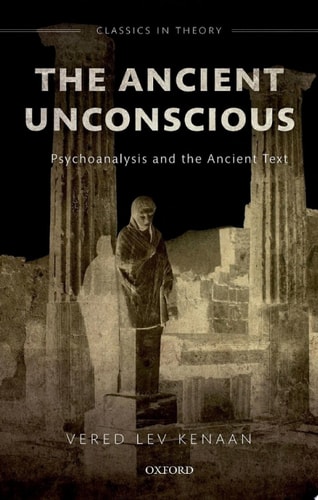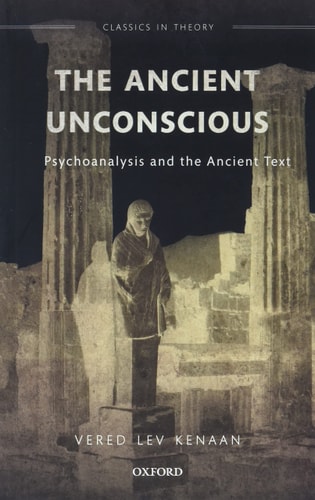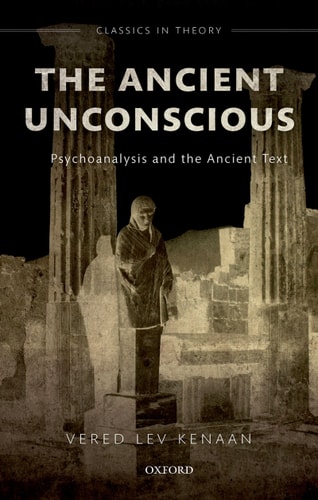
The Ancient Unconscious: Psychoanalysis and Classical Texts
0
0
As an Amazon Associate and affiliate partner, Menrva Books earns from qualifying purchases. Learn more
Author Description
In the field of classical studies, the psychoanalytic construction of the unconscious is rarely regarded as a fruitful methodological concept. Commonly understood as a modern conceptual invention rather than the discovery of a psychic reality, the notion of the unconscious is often criticized as an anachronistic lens, one that ineluctably subjects ancient experience to modern patterns of thought.The Ancient Unconscious seeks to challenge this ambivalent theoretical disposition toward the psychoanalytic concept and reclaim the value of the unconscious as a methodological tool for the study of ancient texts by transforming our understanding of what the unconscious means, the way it operates, and how it relates to textual hermeneutics. It considers the debate over whether the ancients had an unconscious as an invitation to rethink the relationship between antiquity and modernity, investigating the meaning of textuality through contact between historical moments that have no priority under the law of chronology: associations and connections between the past and its future - including the present - belong to the sphere of the unconscious, which is primarily employed here in order to study the inherent, often hidden, links that bind modernity to classical antiquity and modern to ancient experiences.Drawing on an incisive examination of the complicated, often conflicted, relationship between classical studies and psychoanalytic theory, the volume aims to explain why the concept of the unconscious is in fact inseparable from, and crucial for, the study of the ancient text and, more generally, the methodology of classical philology.
Menrva's Summary
THE THESIS
This work investigates whether the psychoanalytic concept of the unconscious can serve as a valid and productive methodological tool for interpreting classical texts rather than being dismissed as an anachronistic modern imposition. Vered Lev Kenaan, a scholar in classical studies, argues that the unconscious is not merely a modern invention but a framework that reveals the inherent, hidden connections between antiquity and modernity. By re-evaluating the relationship between these two historical periods, the author proposes that the unconscious is essential for understanding the complexities of textual hermeneutics and the broader methodology of classical philology.
THE SCOPE MAP
What You Will Find
- A critical analysis of the historical tension between classical studies and psychoanalytic theory.
- A redefinition of the unconscious as a tool for bridging chronological gaps in textual interpretation.
- Examination of the interplay between ancient experience and modern patterns of thought.
- Methodological arguments for integrating psychoanalytic concepts into classical philology.
THE AUTHORITY PERSPECTIVE
Scholars and students of classical literature often note the dense, theoretical nature of the prose, which demands a high level of familiarity with both psychoanalytic discourse and philological traditions. Experts highlight this text as a significant contribution to the ongoing debate regarding the utility of modern critical lenses in the study of ancient literature.
Page Count:
240
Publication Date:
2019-07-08
Publisher:
Oxford University Press
ISBN-10:
0198827792
ISBN-13:
9780198827795
Philosophy
Philology
Literary theory
Psychoanalysis
Community Tags
Similar Books