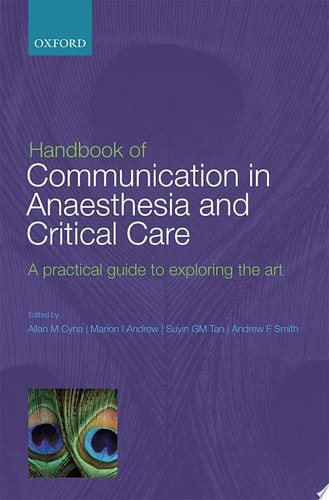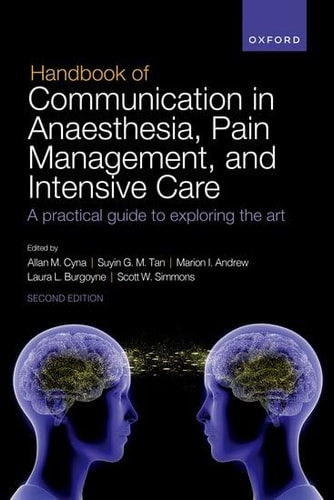
Handbook of Communication in Anaesthesia, Pain Management, and Intensive Care: A practical guide to exploring the art
0
0
As an Amazon Associate and affiliate partner, Menrva Books earns from qualifying purchases. Learn more
Author Description
Communication in anaesthesia, pain management, and intensive care can have profound impacts on patients and healthcare colleagues. Good communication can result in better patient outcomes and experiences of the hospital setting, whereas poor communication is frequently at the heart of adverse incidents, complaints, and litigation.This handbook outlines two model frameworks to improve communication: one to give structure to an interaction and one that explores language structures and the layers of meaning to our words. The frameworks are essential tools for communicating with children, obstetric patients, and those with needle phobia.A practical guide, the book is packed with useful tips to enhance interactions with both patients and colleagues. Numerous examples and vignettes clearly demonstrate ideas that will improve patient care, safety, and bring out the best in everyone around.Fully updated with new clinical guidelines and literature, the second edition includes new chapters on how to talk to patients in pain, featuring motivational interviewing techniques, and on social media. Increased coverage of managing challenging situations, includes communicating with distressed relatives, dealing with complaints, and working with interpreters.The contributors and editors are senior clinicians from North America, Europe, and Australasia, working at the coalface of perioperative and critical care. Blending theory, science, and practicality, this book complements resources for communication skills teaching in anaesthesia and other related professional groups.
Menrva's Summary
THE THESIS
This handbook investigates how structured communication frameworks can mitigate clinical errors and improve patient outcomes in high-stakes medical environments. The authors, a team of senior clinicians from North America, Europe, and Australasia, argue that communication is a clinical skill as vital as technical proficiency. By applying linguistic analysis and structured interaction models, the text provides a methodology for clinicians to navigate complex interpersonal dynamics in anesthesia, pain management, and intensive care settings.
THE SCOPE MAP
What You Will Find
- Two primary communication frameworks for structuring clinical interactions and analyzing linguistic layers of meaning.
- Practical strategies for managing challenging scenarios, including interactions with distressed relatives and handling formal complaints.
- Clinical vignettes and case studies demonstrating the application of motivational interviewing and language techniques.
- Specialized guidance for communicating with vulnerable populations, including pediatric patients, obstetric patients, and individuals with needle phobia.
THE AUTHORITY PERSPECTIVE
Experts recognize this text as a foundational resource for integrating soft skills into the technical training of perioperative and critical care staff. Readers frequently note the practical utility of the provided frameworks in reducing the incidence of adverse events and improving the overall patient experience.
Page Count:
360
Publication Date:
2024-11-29
Publisher:
Oxford University Press
ISBN-10:
0198858663
ISBN-13:
9780198858669
Critical Care
Professional Development
Medical
Anesthesiology
Medicine
Communication Skills
Community Tags
Similar Books