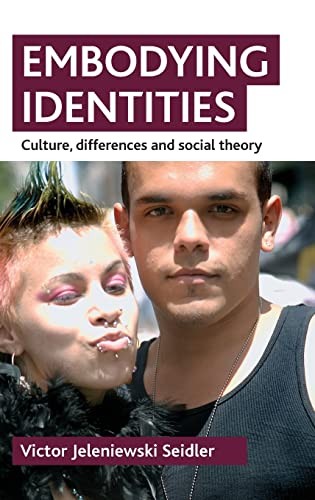
Embodying Identities
0
0
As an Amazon Associate and affiliate partner, Menrva Books earns from qualifying purchases. Learn more
Author Description
In the 1970s and 80s, identities seemed to be 'fixed' or 'socially constructed' through categories of class, 'race', ethnicity, gender, sexualities and religion as they were passed from one generation to the next. These days we are much more able to choose who we want to be. We have begun to recognise the diversity, fragmentation and fluidity of identities, but how do we create and shape our own? Embodying Identities shapes a new language of social theory that allows people to embody their differences with a sense of dignity and self-worth, enabling them to come to terms with the complexities of their lived identities in a post-modern globalised world. The book recognises that we have to understand the networks of complex affiliations and belongings that shape identities. It draws on diverse traditions within classical social theory that have emerged from Marx, Weber and Durkheim, as well as more recent traditions of critical theory and post-structuralism, to illuminate transitions from the modern to the post-modern. Using contemporary examples, Embodying Identities will be of interest to sociology, politics, social work, philosophy and cultural studies students. It will also be of value to social work practitioners and anyone attempting to understand how we form and live our complex and embodied identities
Menrva's Summary
THE THESIS
This book explores how individuals construct and embody their identities in a complex, globalized, and postmodern world. Seidler examines the shift from fixed, socially constructed identities of the past to the fluid and chosen identities of the present. The work aims to develop a new language for social theory that allows individuals to embrace their differences with dignity and self-worth, navigating the intricate networks of affiliations and belongings that shape who we are.
THE SCOPE MAP
- Analysis of transitions from modern to postmodern identity formation.
- Draws on classical social theory from Marx, Weber, and Durkheim.
- Incorporates recent traditions of critical theory and post-structuralism.
- Uses contemporary examples to illustrate theoretical concepts.
- Focuses on the diversity, fragmentation, and fluidity of identities.
- Explores how individuals choose and shape their own identities.
- Addresses the creation of a sense of dignity and self-worth in identity formation.
- Examines complex affiliations and belongings that shape identities.
THE AUTHORITY PERSPECTIVE
The book is positioned as a significant contribution to social theory, offering a new framework for understanding identity in contemporary society. It is expected to be of interest to students and practitioners across sociology, politics, social work, philosophy, and cultural studies. The work aims to provide valuable insights for anyone grappling with the complexities of forming and living embodied identities in a globalized world. Its engagement with both classical and contemporary theoretical traditions suggests a comprehensive and nuanced approach to its subject matter.
Page Count:
228
Publication Date:
2010-01-01
ISBN-10:
1847423825
ISBN-13:
9781847423825
Psychology
Non-Fiction
Philosophy
Science
Social Theory
Sociology
Community Tags
Similar Books