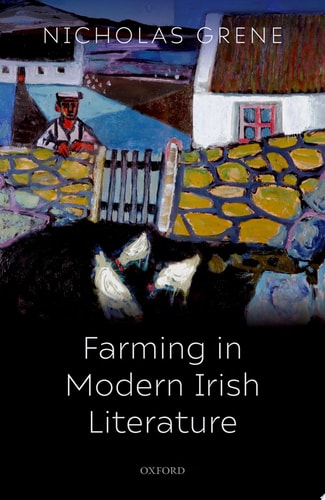
Farming in Modern Irish Literature
0
0
As an Amazon Associate and affiliate partner, Menrva Books earns from qualifying purchases. Learn more
Author Description
This innovative study analyzes the range of representation of farming in Irish literature in the period since independence/partition in 1922, as Ireland moved from a largely agricultural to a developed urban society. In many different forms including poetry, drama, fiction, and autobiography, writers have made literary capital by looking back at their rural backgrounds, even where those may be a generation back. The first five chapters examine some of the key themes: the impact of inheritance on family in the patriarchal system where there could only be one male heir; the struggles for survival in the poorest regions of the West of Ireland; the uses of childhood farming memories whether idyllic or traumatic; and the representation of communities, challenging the homogeneous idealizing images of the Literary Revival; the impact of modernization on successive generations into the twenty-first century. The final three chapters are devoted to three major writers in whose work farming is central: Patrick Kavanagh, the small farmer who had to find an individual voice to express his own unique experience; John McGahern in whose fiction the life of the farm is always posited as alternative to a rootless urban milieu; and Seamus Heaney who re-imagined his farming childhood in so many different modes throughout his career. Farming in Modern Irish Literature yields original insights into the literary iconography of rural Ireland and its interplay with social and cultural history, opening up fresh vistas on the achievements of Irish writers in different genres, styles, and historical eras.
Menrva's Summary
THE THESIS
This study investigates how the representation of farming has evolved within Irish literature from 1922 to the twenty-first century as the nation transitioned from an agrarian society to an urbanized one. Nicholas Grene, a scholar of Irish literature, utilizes a multidisciplinary approach to examine how various authors have engaged with rural life through poetry, drama, and prose. By analyzing both thematic trends and the specific works of major figures, the book argues that farming serves as a critical site of cultural identity and social tension in the Irish literary imagination.
THE SCOPE MAP
What You Will Find
- Analysis of the impact of patriarchal inheritance systems on family dynamics in rural settings.
- Examination of the shift from the idealized rural imagery of the Literary Revival to more complex, modern representations.
- Detailed case studies on the works of Patrick Kavanagh, John McGahern, and Seamus Heaney.
- Exploration of the tension between rural childhood memories and the realities of a modern, urbanized society.
THE AUTHORITY PERSPECTIVE
Experts recognize this work as a significant contribution to the study of Irish literary iconography and its relationship to social history. Readers frequently note the clarity with which Grene connects broad cultural shifts to the specific stylistic choices of major Irish writers.
Page Count:
256
Publication Date:
2021-10-25
Publisher:
Oxford University Press
ISBN-10:
019886129X
ISBN-13:
9780198861294
Authors english
Literary Criticism
Irish literature
Sociology
Agriculture
Cultural History
English literature
Community Tags
Similar Books