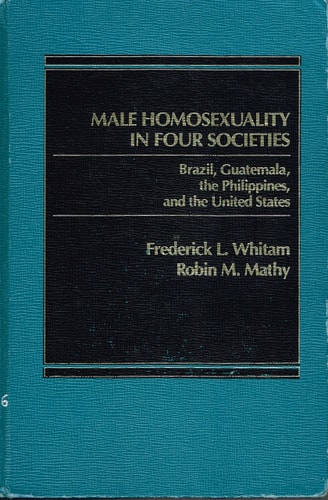
Male Homosexuality in Four Societies: United States, Guatemala, Brazil, the Philippines
0
0
As an Amazon Associate and affiliate partner, Menrva Books earns from qualifying purchases. Learn more
Author Description
This book shows which aspects of homosexuality are culturally variable and which are not and explores the implications for current descriptions and explanations of homosexuality. Utilizing a combination of quantitative and qualitative material, the authors draw conclusions about the nature of homosexuality across cultural boundaries. Among their findings: homosexuals comprise approximately five percent of the population in each country no matter the degree of repressiveness or acceptance; homosexuals in different societies appear to have the same occupational and leisure-time interests; and their psycho-sexual development is similar and characterized by similar patterns of early cross-gender behavior.
Menrva's Summary
THE THESIS
This work investigates which aspects of homosexuality are culturally variable and which remain constant across diverse societies. The authors, Frederick L. Whitam and Robin M. Mathy, utilize a comparative framework to analyze the nature of homosexuality in the United States, Guatemala, Brazil, and the Philippines. By synthesizing quantitative data with qualitative observations, they argue that certain developmental patterns and demographic proportions of homosexual individuals persist regardless of the specific cultural or social environment.
THE SCOPE MAP
What You Will Find
- Comparative analysis of homosexual populations in four distinct nations
- Data regarding the prevalence of homosexuality across varying levels of social acceptance
- Examination of occupational and leisure-time interests among homosexual individuals
- Analysis of psycho-sexual development and early cross-gender behavior patterns
Scope Limits
- The study does not account for every global culture, focusing specifically on the four named societies
- The research does not explore the full spectrum of non-binary or transgender identities beyond the scope of the authors' specific definitions of homosexuality
THE AUTHORITY PERSPECTIVE
Experts recognize this text as a significant contribution to the cross-cultural study of human sexuality. Readers frequently note the academic density of the prose and the authors' reliance on empirical data to challenge prevailing social constructionist theories.
Page Count:
208
Publication Date:
1986-01-01
Publisher:
Praeger Publishers
ISBN-10:
0030042984
ISBN-13:
9780030042980
Sociology
LGBTQ Studies
Anthropology
YA Dystopian
Community Tags
Similar Books