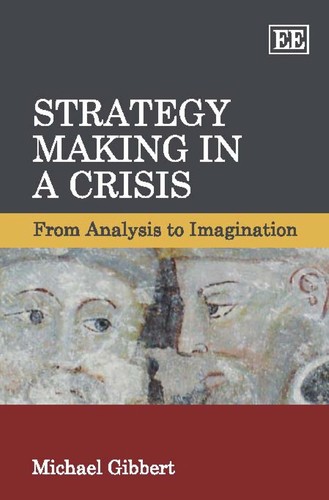
Strategy Making in a Crisis
0
0
As an Amazon Associate and affiliate partner, Menrva Books earns from qualifying purchases. Learn more
Author Description
Which strategy making approach works best in a crisis? In current literature, the recommendations oscillate between prediction, control, and practice, but this unique book focuses specifically on strategy making in a crisis. In a crisis, the business landscape is neither stable nor predictable, resources are scarce rather than abundant, customers disappear and shareholders revolt, all of which can make prediction and control very difficult. Drawing on evidence from philosophy, and on a multi-year case study of a major multinational, Michael Gibbert points to three different kinds of imaginations and proposes a three-step model for imaginative strategy making. Introducing new topics on this subject, Strategy Making in a Crisis will strongly appeal to top-level managers, including corporate development departments, and business-unit level strategy. Postgraduate students will also receive ideas for their own theses, not only from the content, but also from the approach - which is deductive and integrates management theories using social science literature - and methodology.--BOOK JACKET.
Menrva's Summary
THE THESIS
This book investigates which strategy-making approach is most effective during a crisis. The author, Michael Gibbert, addresses the challenge of making strategic decisions when business environments are unstable, resources are limited, and stakeholders are volatile. Drawing on philosophical evidence and a multi-year case study of a major multinational corporation, Gibbert introduces three distinct types of imagination and proposes a three-step model for imaginative strategy making in crisis situations. The book's deductive approach integrates management theories with social science literature, offering a unique perspective for advanced study.
THE SCOPE MAP
- Analysis of strategy-making approaches: prediction, control, and practice.
- Exploration of the unique challenges of crisis environments: instability, resource scarcity, and stakeholder revolt.
- Introduction of three distinct types of imagination relevant to strategic thinking.
- Presentation of a three-step model for imaginative strategy making in crises.
- Detailed multi-year case study of a major multinational corporation's crisis response.
- Integration of management theories with social science literature.
- Deductive research methodology.
THE AUTHORITY PERSPECTIVE
The book is positioned to appeal to top-level managers, corporate development departments, and business-unit strategists, as well as postgraduate students seeking ideas for their theses. Its approach, which combines philosophical evidence with a detailed case study and integrates management theories using social science literature, is highlighted as a key contribution. The methodology is described as deductive, offering a structured framework for understanding strategy in turbulent times. The content is presented as introducing new topics to the subject area.
Page Count:
232
Publication Date:
2010-01-01
ISBN-10:
1848442408
ISBN-13:
9781848442405
Business
Non-Fiction
Management
Strategy
Case Study
Community Tags
Similar Books