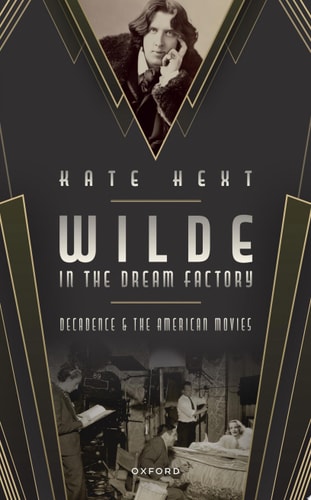
Wilde in the Dream Factory: Decadence and the American Movies
0
0
As an Amazon Associate and affiliate partner, Menrva Books earns from qualifying purchases. Learn more
Author Description
Hollywood is haunted by the ghost of playwright and novelist Oscar Wilde. This is the story of his haunting, told for the first time. Set within the rich evolving context of how the American entertainment industry became cinema, and how cinema become the movies, it reveals how Wilde helped to shape Hollywood in the early twentieth century.It begins with his 1882 American tour, and traces the ongoing popularity of his plays and novel in the early twentieth century, after his ignominious death. Following the early filmmakers, writers and actors as they headed West in the Hollywood boom, it uncovers how and why they took Wilde's spirit with them. There, in Hollywood, in the early days of silent cinema, Wilde's works were adapted. They were also beginning to define a new kind of style -- a 'Wilde-ish spirit', as Ernst Lubitsch called it -- filtering into the imaginations of Lubitsch himself, as well as Alla Nazimova, Ben Hecht, Samuel Hoffenstein and many others. These were the people who translated Wilde's queer playfulness into the creation of screwball comedies, gangster movies, B-movie horrors, and films noir. There, Wilde and his style embodied a spirit of rebellion and naughtiness, providing a blue-print for the charismatic cinematic criminal and screwball talk onscreen.Discussing films including Bringing Up Baby, Underworld, and Laura, alongside definitive adaptations of Wilde's works, including, The Picture of Dorian Gray, Lady Windermere's Fan, and Salome, Wilde in the Dream Factory revises how we understand both Wilde's afterlife and cinema's beginnings.
Menrva's Summary
THE THESIS
This book investigates how the aesthetic and philosophical influence of Oscar Wilde shaped the foundational development of the American film industry. Kate Hext, an expert in Decadent literature and modernism, utilizes archival research and film analysis to argue that Wilde’s spirit—characterized by queer playfulness and rebellion—provided a crucial blueprint for early Hollywood. She traces this influence from Wilde’s 1882 American tour through the evolution of silent cinema into the talkie era, demonstrating how his works and persona informed the sensibilities of key filmmakers and writers.
THE SCOPE MAP
What You Will Find
- Historical analysis of Wilde’s 1882 American tour and its long-term cultural impact.
- Examination of the 'Wilde-ish spirit' in the works of Ernst Lubitsch, Alla Nazimova, and Ben Hecht.
- Case studies of genre evolution, including screwball comedy, gangster films, and film noir.
- Critical readings of cinematic adaptations such as The Picture of Dorian Gray, Lady Windermere's Fan, and Salome.
THE AUTHORITY PERSPECTIVE
Scholars and film historians recognize this work as a significant contribution to the study of cross-media influence and the history of early Hollywood. Readers frequently note the meticulous archival detail and the author's ability to connect literary decadence with the stylistic emergence of classic American cinema.
Page Count:
288
Publication Date:
2024-01-01
Publisher:
Oxford University Press
ISBN-10:
0198875371
ISBN-13:
9780198875376
Biography
Cinema
Film History
Literary Criticism
Dramas & Plays
Community Tags
Similar Books