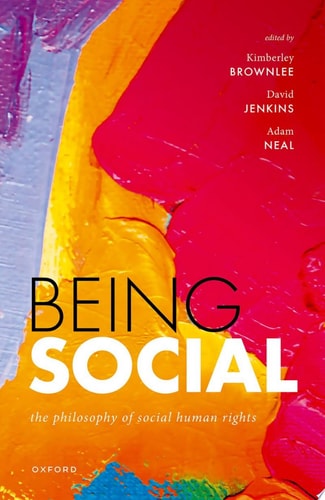
Being Social: The Philosophy of Social Human Rights
0
0
As an Amazon Associate and affiliate partner, Menrva Books earns from qualifying purchases. Learn more
Author Description
Human rights capture what people need to live minimally decent lives. Recognised dimensions of this minimum include physical security, due process, political participation, and freedom of movement, speech, and belief, as well as - more controversially for some - subsistence, shelter, health, education, culture, and community. Far less attention has been paid to the interpersonal, social dimensions of a minimally decent life, including our basic needs for decent human contact and acknowledgement, for interaction and adequate social inclusion, and for relationship, intimacy, and shared ways of living, as well as our competing interests in solitude and associative freedom.This pioneering collection of original essays aims to remedy the neglect of social needs and rights in human rights theory and practice by exploring the social dimensions of the human-rights minimum. The essays subject enumerated social human rights and proposed social human rights to philosophical scrutiny, and probe the conceptual, normative, and practical implications of taking social human rights seriously. The contributors to this volume demonstrate powerfully how important this undertaking is, despite the thorny theoretical and practical challenges that social rights present.Being Social is the first in-depth and polyphonic philosophical treatment of social rights qua human rights in the English language. It explains how social rights are rights to participate and not only to being in society, but also, even more importantly, it uncovers the social and interactional dimension of all human rights.
Menrva's Summary
THE THESIS
This collection investigates the neglected interpersonal and social dimensions of human rights, questioning how social needs for connection and inclusion function as fundamental requirements for a minimally decent life. The authors, including Adam Neal, David Jenkins, and Kimberley Brownlee, assemble a series of original essays that challenge the traditional focus on individualistic rights. By applying philosophical scrutiny to the conceptual and normative frameworks of social rights, the contributors argue that human rights must be re-evaluated to account for the necessity of social interaction and communal participation.
THE SCOPE MAP
What You Will Find
- Philosophical analysis of social rights as fundamental human rights.
- Examination of the tension between individual autonomy and associative freedom.
- Exploration of the role of intimacy, recognition, and social inclusion in human rights theory.
- Critical assessment of the practical implications for international human rights law.
THE AUTHORITY PERSPECTIVE
Experts identify this volume as a foundational text for those seeking to bridge the gap between individualistic legal theory and the social nature of human existence. Readers frequently note the academic density of the prose, which serves as a rigorous resource for scholars and practitioners in the field of international law.
Page Count:
320
Publication Date:
2023-01-06
Publisher:
Oxford University Press
ISBN-10:
0198871198
ISBN-13:
9780198871194
Philosophy
Law
Human rights
Sociology
Community Tags
Similar Books