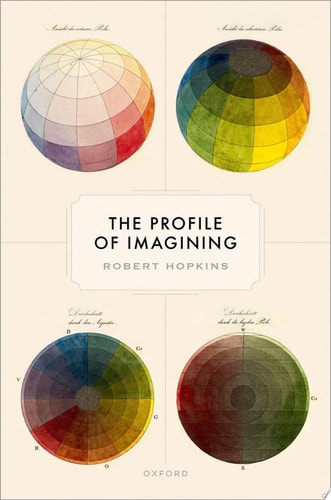
The Profile of Imagining
0
0
As an Amazon Associate and affiliate partner, Menrva Books earns from qualifying purchases. Learn more
Author Description
What is sensory imagining and what role does it play in our lives? How does visualizing a castle, running through a tune in one's head, or imagining the taste of fish ice cream relate to perceiving such things, or to remembering them? What are the connections between imagining and agency, and how does it relate to emotion and other affect? The Profile of Imagining offers a theory that answers these and many other questions. It argues that sensory imagining involves the redeployment of resources central to perception, though in a radically different context and to very different effect. The result is a view that explains central features of imagining's phenomenology and functional role, including its capacity to capture what it would be like to perceive its objects, while acknowledging the many and striking differences between imagining and sensing. Hopkins shows how the view can be extended to imagining in other forms, especially the imagining of affect; and uses it to argue for some surprising conclusions: that imagining something is not a way to engage with its aesthetic character; and that imagining provokes real feeling much less often than is usually assumed.
Menrva's Summary
THE THESIS
What is the nature of sensory imagining and how does it function within human cognition and experience? Robert Hopkins, a philosopher specializing in aesthetics and the philosophy of mind, presents a comprehensive theory that posits sensory imagining as the redeployment of perceptual resources. By analyzing the functional and phenomenological differences between sensing and imagining, the author constructs a framework that addresses how we visualize, simulate, and emotionally respond to imagined objects.
THE SCOPE MAP
What You Will Find
- A theoretical framework linking sensory imagining to perceptual processes.
- Analysis of the relationship between imagining, agency, and emotional affect.
- Philosophical arguments regarding the role of imagination in aesthetic engagement.
- Critical evaluation of the frequency and nature of emotional responses to imagined scenarios.
THE AUTHORITY PERSPECTIVE
Experts in the philosophy of mind recognize this work as a rigorous contribution to the study of mental imagery and cognitive architecture. Readers frequently note the academic density of the prose, which is intended for scholars and advanced students of philosophy.
Page Count:
288
Publication Date:
2024-01-01
Publisher:
Oxford University Press
ISBN-10:
0198896174
ISBN-13:
9780198896173
Psychology
Philosophy
Politics
Epistemology
Aesthetics
Consciousness & Thought
Community Tags
Similar Books