A World of Private Higher Education
0
0
As an Amazon Associate and affiliate partner, Menrva Books earns from qualifying purchases. Learn more
Author Description
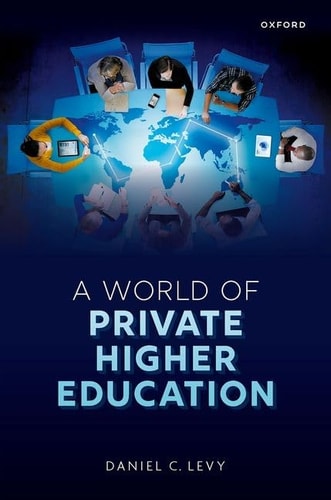
Higher Education--long And Overwhelmingly Seen Outside The Us As An Intrinsically Public Sector Function With Limited Private Presence--has Become A Firmly Dual-sector Reality Globally. Indeed, A Third Of The World's Now More Than 200 Million Higher Education Enrollments Are In Private Institutions, A Share Higher Than In The Us. Against This New Background, We Respond To The Historically Abiding Question Of How Social Functions Are Sectorally Distributed And Engaged, Exploring Both Private-public (intersectoral) And Private-private (intrasectoral) Distinctiveness. We Discover Rich Double Distinctiveness Wherein Various Parts Of The Private Sector Differ Differently From The Public Sector. Guided And Organized By These Sectoral Concepts, Accumulated Empirical Findings--often Approaching What Provocatively Might Be Called Private Higher Education Laws-- Significantly Enhance Understanding Of The Extensive, Varied, Rapidly Changing, And Otherwise Often Vexing Terrain Under Study. The Study's Treatment Of How And Why Private Higher Education Both Thrives And Fails To Thrive Is Truly Global, Even As It Highlights Salient Regional Characteristics. Likewise, The Account Provides The Historical Sweep Vital To Understanding Contemporary Realities. Complementing Its Qualitative Thrust, The Book Mines An Unprecedented Quantitative Profile Of The World's Private And Public Higher Education--drawing Heavily On A New, Massive, Global Enrollment Dataset-- Provided By Publisher.
Menrva's Summary
THE THESIS
This work investigates the global shift toward dual-sector higher education systems, questioning how social functions are distributed between public and private institutions. Daniel C. Levy, a prominent scholar in the field of international higher education, utilizes a massive, newly compiled global enrollment dataset to analyze the expansion of private universities. He argues that the private sector exhibits a 'double distinctiveness,' where internal variations within private institutions create complex relationships with the public sector. The book provides a theoretical framework to explain why private higher education thrives in some regions while failing in others.
THE SCOPE MAP
What You Will Find
- A comprehensive analysis of global enrollment data across both public and private higher education sectors.
- A conceptual framework for understanding intersectoral and intrasectoral differences.
- Historical context regarding the evolution of private education outside the United States.
- Empirical findings that identify recurring patterns or 'laws' governing the growth and decline of private institutions.
THE AUTHORITY PERSPECTIVE
Experts recognize this text as a foundational resource for understanding the rapid privatization of global higher education. Readers frequently note the academic density of the prose and the rigorous quantitative methodology employed by the author.
Page Count:
336
Publication Date:
2024-09-24
Publisher:
Oxford University Press
ISBN-10:
0198903529
ISBN-13:
9780198903529
Public Policy
Sociology
Education higher
Schools & Teaching
Education Theory
Global Studies
Higher Education
Education
Community Tags
Similar Books