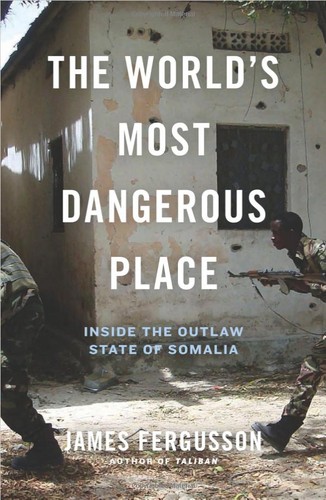
The World's Most Dangerous Place
0
0
As an Amazon Associate and affiliate partner, Menrva Books earns from qualifying purchases. Learn more
Author Description
Although the war in Afghanistan is now in its endgame, the West’s struggle to eliminate the threat from Al Qaeda is far from over. A decade after 9/11, the war on terror has entered a new phase and, it would seem, a new territory. In early 2010, Al Qaeda operatives were reportedly “streaming” out of central Asia toward Somalia and the surrounding region. Somalia, now home to some of the world’s most dangerous terrorists, was already the world’s most failed state. Two decades of anarchy have spawned not just Islamic extremism but piracy, famine, and a seemingly endless clan-based civil war that has killed an estimated 500,000, turned millions into refugees, and caused hundreds of thousands more to flee and settle in Europe and North America. What is now happening in Somalia directly threatens the security of the world, possibly more than any other region on earth. James Fergusson’s book is the first accessible account of how Somalia became the world’s most dangerous place and what we can—and should—do about it.
Menrva's Summary
THE THESIS
The book investigates how Somalia became a global security threat and explores potential solutions. James Fergusson's work examines the complex factors that have led to Somalia's status as a failed state, including decades of anarchy, clan-based civil war, famine, and the rise of Islamic extremism and piracy. It details how these internal conflicts have created a breeding ground for international terrorist organizations like Al Qaeda, directly impacting global security. The book aims to provide an accessible account of this crisis and suggest actionable steps for the international community.
THE SCOPE MAP
- Analysis of Somalia's descent into a failed state over two decades of anarchy.
- Exploration of the links between internal conflict, famine, piracy, and Islamic extremism.
- Examination of Al Qaeda's presence and activities in Somalia and the surrounding region.
- Discussion of the global security implications stemming from the situation in Somalia.
- Assessment of potential international responses and solutions to the crisis.
THE AUTHORITY PERSPECTIVE
The book is presented as the first accessible account of Somalia's transformation into a dangerous global hotspot. It aims to inform readers about the complex internal dynamics that have led to widespread instability and the rise of extremist groups. The author's work is positioned to explain the direct threats this situation poses to international security, offering insights into potential actions that can be taken. The framing suggests a focus on geopolitical analysis and actionable policy recommendations for a complex, ongoing crisis.
Page Count:
432
Publication Date:
2013-01-01
ISBN-10:
0306821176
ISBN-13:
9780306821172
Politics
History
Non-Fiction
Current Events
Terrorism
International relations
Geopolitics
Failed States
Community Tags
Similar Books