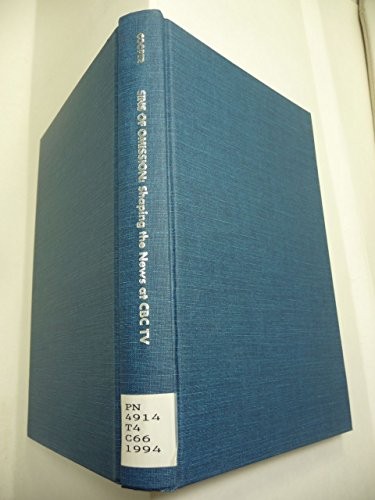
Sins of Omission
0
0
As an Amazon Associate and affiliate partner, Menrva Books earns from qualifying purchases. Learn more
Author Description
Studies over nearly a generation have shown that Canadians receive most of their information about the world from television. Barry Cooper contends that what TV, including TV news, does well is entertain, rather than provide accurate factual information or balanced insight. TV news is produced with great deliberation and technical skill. It has a logic that extends from the camera angles used in recording visual material to the anchor's carefully crafted script, desk, and lighting. Cooper argues, however, that TV news is consumed like a live performance. The combination of careful and reflective production with careless and unreflective consumption makes it possible for TV news to construct a world that may be unrelated to the common-sense reality of everyday life. And audiences know they have no way of determining whether TV mediation of the real world in a particular instance is trustworthy. Cooper supports his contention that audiences are right in not trusting TV news by focusing on CBC TV coverage of the Soviet Union, the Reagan-Gorbachev summit talks, the Afghanistan war, South Africa, and the wars in Ethiopia and Mozambique, in roughly 250 broadcasts between June 1988 and June 1989. He places the news items in the context of ongoing coverage so that the weave of displacements, omissions, and emphases comes to the foreground in a way it does not for the nightly news watcher, who sees a mosaic of bits and pieces. The larger question, beyond the matter of the stance taken by CBC TV news in these stories, is the place of television in technological societies such as ours. If TV news is encouraging a growing gap between common-sense reality and the second reality produced by TV, then viewers will increasingly distrust both TV and common-sense reality, a consequence that is discouraging for the prospect of responsible participation in society and responsible democratic government. This is a fascinating and provocative analysis of an important topic that so fa
Menrva's Summary
THE THESIS
Television news, despite its careful production, constructs a reality detached from everyday life, leading audiences to distrust both the medium and common sense. Barry Cooper argues that the primary function of television news is entertainment rather than factual reporting or balanced insight. He posits that the combination of deliberate production techniques and unreflective consumption allows TV news to create a mediated world that may not align with common-sense reality. This disconnect leaves viewers unable to determine the trustworthiness of TV's portrayal of events, fostering a broader societal distrust.
THE SCOPE MAP
- Analysis of TV news production logic, from camera angles to script crafting.
- Examination of how TV news is consumed as a live performance.
- Case studies of CBC TV coverage on the Soviet Union, Reagan-Gorbachev summits, the Afghanistan war, South Africa, and wars in Ethiopia and Mozambique.
- Focus on displacements, omissions, and emphases in news reporting over approximately 250 broadcasts between June 1988 and June 1989.
- Discussion of the larger implications of television's role in technological societies.
- Exploration of the growing gap between common-sense reality and the 'second reality' produced by TV.
- Consequences of viewer distrust for responsible societal participation and democratic government.
THE AUTHORITY PERSPECTIVE
Barry Cooper's analysis is presented as a provocative examination of television's influence on public perception and societal trust. The book's detailed focus on specific news events and its critique of media consumption patterns suggest it aims to stimulate critical thinking about the information we receive. The work likely appeals to those interested in media studies, sociology, and the impact of technology on democratic societies, offering a framework for understanding the disconnect between mediated realities and everyday life.
Page Count:
255
Publication Date:
1994-01-01
ISBN-10:
0802005977
Non-Fiction
Sociology
Media Studies
Journalism