A First Sketch of English Literature
0
0
As an Amazon Associate and affiliate partner, Menrva Books earns from qualifying purchases. Learn more
Author Description
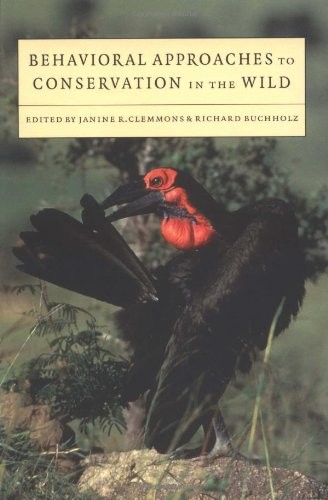
Today's conservation literature emphasizes landscape ecology and population genetics without addressing the behavioral links that enable the long-term survival of populations. This book presents theoretical and practical arguments for considering behavior patterns in attempts to conserve biodiversity. Prominent scientists and wildlife managers are brought together in this volume to address a number of issues, including the limits and potentials of behavioral research to conservation, the importance of behavioral variation as a component of biodiversity, and the use of animal behavior to solve conservation problems and provide specific direction for research and management practices. The book is unique in emphasizing conservation of wild populations as opposed to captive and reintroduced populations, where behavioral research has concentrated in the past. The variety of expertise in this volume demonstrates that the complete ethological framework, not just behavioral ecology, provides valuable techniques and knowledge for conserving biodiversity.
Menrva's Summary
THE THESIS
This book argues for the critical integration of behavioral patterns into conservation strategies to ensure the long-term survival of wild populations. It addresses the limitations and potentials of behavioral research in conservation, highlights the significance of behavioral variation as a component of biodiversity, and explores how animal behavior can be leveraged to solve conservation challenges and guide future research and management practices. The volume uniquely focuses on wild populations, diverging from past research concentrated on captive or reintroduced animals, and demonstrates how a comprehensive ethological framework offers valuable insights for biodiversity conservation.
THE SCOPE MAP
- Theoretical and practical arguments for incorporating behavior patterns into biodiversity conservation.
- Analysis of the limits and potentials of behavioral research for conservation efforts.
- Discussion on the importance of behavioral variation as a key component of biodiversity.
- Methods for using animal behavior to address conservation problems.
- Specific directions for research and management practices in conservation.
- Emphasis on the conservation of wild populations, distinct from captive or reintroduced populations.
- Demonstration of how a complete ethological framework provides valuable techniques and knowledge for conserving biodiversity.
THE AUTHORITY PERSPECTIVE
This volume brings together prominent scientists and wildlife managers to discuss the integration of behavioral science into conservation. The collection emphasizes the unique focus on wild populations, a departure from previous research trends. It highlights the value of ethology in providing practical techniques and knowledge for biodiversity conservation. The diverse expertise presented underscores the necessity of considering behavioral patterns for long-term population survival.
Page Count:
382
Publication Date:
1997-01-01
ISBN-10:
0521589606
History
Science
Non-Fiction
Ethology
Conservation Biology
Behavioral Ecology
Biodiversity
Community Tags
Similar Books