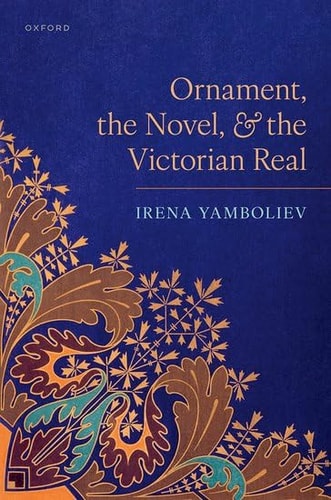
Ornament, the Novel, and the Victorian Real
0
0
As an Amazon Associate and affiliate partner, Menrva Books earns from qualifying purchases. Learn more
Author Description
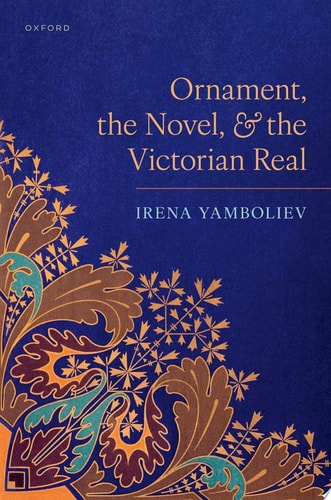
This Book Demonstrates That The So-called Lesser Decorative Arts Transformed The Representational Logic And The Prose Style Of The Novel In The Late Nineteenth Century. It Builds From William Morris's Statement That All Real Art Is Ornamental, Acknowledging That Ornament Is The Heart And End Of The Artistic Gesture. The Book Grounds Itself Historically In Theories And Practices Of Decorative Arts Developed In The Middle Of The Nineteenth Century, A Moment When Victorian Designers Overhauled The Reigning Principles Of Ornamentation. Developing A New Canon Of Design Theory, This Study Shows That Ornament Is Useful: It Furnishes A New Concept Of The Real And A Method For Engaging It-a Realism. Rather Than Pictorial, Gritty Particularity And Exhaustive Detailing, Decorative Designers Used Abstraction To Probe Features Of Reality Otherwise Missed. These Potencies Carried Into The Novel. Wallpaper Patterns, Hinge-work, And Stained Glass: Such Designs Express Principles Of Visual Form-including Symmetry, Repetition, And Conventionalization-that Novelists Transform Into Literary Principles, Into Syntax. The Resulting Ornamental Prose Brings Representational Possibilities Not Otherwise Available. George Eliot, Thomas Hardy, A.c. Swinburne, Oscar Wilde, And D.h. Lawrence Use Ornamental Techniques To Liberate Into Language The Mechanics Of Perception, The Laws Guiding A Body's Relationships To Its Surroundings, The Patterns Of The Mind, And The Dynamics Of Individuation. In Recognizing Ornament's Contributions To Realism, To The Form Of The Novel, And To Our Formalisms Of The Novel, Ornament, The Novel, And The Victorian Real Corrects A Long-standing Equation Of Ornament With Fantasy, Empty Excess, Or Decadence.
Menrva's Summary
THE THESIS
This book investigates how the decorative arts of the late nineteenth century fundamentally reshaped the representational logic and prose style of the Victorian novel. Irena Yamboliev, a scholar of Victorian literature and visual culture, argues that ornament was not merely decorative but a functional tool for defining realism. By analyzing the intersection of design theory and literary practice, she demonstrates that novelists adopted principles like symmetry and repetition to capture aspects of reality that traditional, detail-oriented realism often overlooked.
THE SCOPE MAP
What You Will Find
- An analysis of nineteenth-century decorative art theories, including the work of William Morris.
- A framework for understanding how visual design principles like abstraction and conventionalization translate into literary syntax.
- Case studies of major authors including George Eliot, Thomas Hardy, A.C. Swinburne, Oscar Wilde, and D.H. Lawrence.
- A re-evaluation of the relationship between ornamental aesthetics and the development of literary realism.
THE AUTHORITY PERSPECTIVE
Scholars recognize this work as a significant intervention in Victorian studies, noting its ability to bridge the gap between art history and literary criticism. Readers frequently highlight the density of the prose and the author's success in challenging long-standing assumptions about the role of ornament in prose fiction.
Page Count:
256
Publication Date:
2025-11-08
Publisher:
Oxford University Press
ISBN-10:
0198958153
ISBN-13:
9780198958154
History
Realism
Design Theory
Literary Criticism
Victorian
Art History
Community Tags
Other Editions(2)
Similar Books