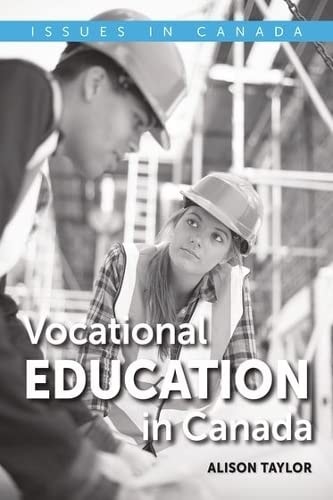
Vocational Education in Canada
0
0
As an Amazon Associate and affiliate partner, Menrva Books earns from qualifying purchases. Learn more
Author Description
How best to educate youth for the world of work has long been a subject of discussion. In more recent times, the so-called phenomenon of "Baristas with B.A.," the "knowledge economy" and alarm over youth who are not in education, employment, or training ("NEETS") have been the focus of policy. The past decade has seen a flurry of reports, media opinions, and ongoing reform initiatives. Even so, debate and disagreement persists. Many reports, in fact, are contradictory; no clear picture of how reforms should be organized has emerged. Professor of sociology of education Alison Taylor has conducted much research into policies and practice related to vocational education and education reform. Taylor traces the history of vocational education in Canada and surveys more recent initiatives, considering how successful they have been and where weakness have arisen. Canada, she argues, inherited from the UK a strong "academic/vocational" division in curriculum, which serves no students well. While the German VET system, known to have stronger support for student transitions, warrants consideration, the context is quite different from that of Canada. Behind questions such as how education should respond to labour market demands, which skills, and what level of skills is needed Taylor sees deeper issues. Such issues include the following: What knowledge is the most valuable, who has access to it, and what agendas are fuelling the debate? Education and employment are unlikely to intersect in a straightforward manner, but there are important linkages to be made. Taylor argues for a rich and deep vocational education for youth, which prepares and equips them for working life by exploring the interconnections between practical and theoretical knowledge. Such a connective learning approach would help students develop concepts, ideas and skills that can be generalized across settings and would help youth adapt to changing circumstances by encouraging lifelong learning.
Menrva's Summary
THE THESIS
How can the Canadian education system effectively bridge the gap between academic curriculum and the evolving demands of the modern labor market? Alison Taylor, a professor of sociology of education, examines the historical and contemporary landscape of vocational training in Canada to address the persistent disconnect between schooling and employment. She argues that the inherited academic-vocational divide is outdated and proposes a connective learning model that integrates practical and theoretical knowledge to better prepare youth for a dynamic workforce.
THE SCOPE MAP
What You Will Find
- Historical analysis of the academic-vocational curriculum divide in Canada.
- Comparative study of international vocational education models, including the German VET system.
- Examination of policy initiatives regarding the knowledge economy and youth employment trends.
- Theoretical framework for a connective learning approach to vocational education.
THE AUTHORITY PERSPECTIVE
Experts recognize this work as a critical contribution to the sociology of education, particularly for its nuanced critique of current policy reforms. Readers frequently note the academic rigor of the text, which provides a foundational understanding of the structural challenges facing Canadian vocational training systems.
Page Count:
176
Publication Date:
2016-05-14
Publisher:
Oxford University Press
ISBN-10:
0199009988
ISBN-13:
9780199009985
Vocational Training
Education
Sociology
Public Policy
Community Tags
Similar Books