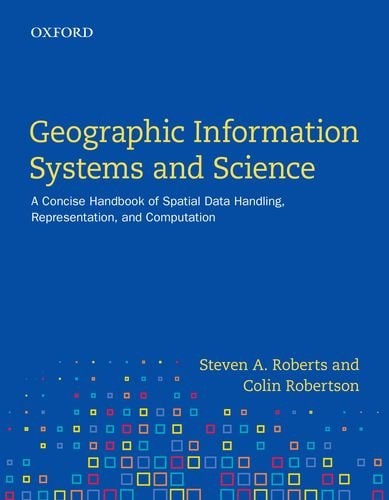
Geographic Information Systems and Science: A Concise Handbook of Spatial Data Handling, Representation, and Computation
0
0
As an Amazon Associate and affiliate partner, Menrva Books earns from qualifying purchases. Learn more
Author Description
Geographic Information Systems helps students understand how GIS enables us to digitally represent the forms, patterns and processes of Earth. The text demonstrates how the special qualities of spatial geographic data require new methods and theories, and how these new methods and theories embody the field of GIScience that underlie the technology of GIS. Designed for users already familiar with GIS, it takes students beyond the surface of the technology by explaining methods and algorithms in enough detail for students to get an intuitive grasp of the underlying ideas while also demonstrating how those ideas are applied to geographical information.In order to help students become more effective users of GIS technology, the book highlights many of the common research challenges of GIS and invites the reader to think broadly about the assumptions embedded in GIS practice today. The authors stress a critical approach throughout by describing selected aspects of the field in sufficient depth to scrutinize the formalisms underlying the simple user-interfaces that greet new GIS users. Geographic Information Systems serves as an indispensable gateway to higher study in GIS by readers interested in the fundamental research challenges facing the field today.
Menrva's Summary
THE THESIS
This handbook investigates the fundamental mathematical and computational frameworks that enable Geographic Information Systems to represent and analyze spatial data. The authors, Colin E. Robertson and Steven A. Roberts, provide a rigorous examination of the algorithms and theories that underpin modern GIS technology. By moving beyond simple interface operation, the text establishes a critical perspective on how spatial data is processed, modeled, and interpreted within the broader field of GIScience.
THE SCOPE MAP
What You Will Find
- Mathematical and algorithmic foundations of spatial data representation
- Analysis of patterns and processes of Earth as captured by digital systems
- Critical evaluation of research challenges and underlying assumptions in GIS practice
- Methodological approaches to spatial computation and data handling
THE AUTHORITY PERSPECTIVE
Experts identify this text as a foundational resource for students and practitioners seeking to understand the theoretical mechanics behind GIS software. Readers frequently note the technical density of the prose, which is intended for those already familiar with basic GIS operations.
Page Count:
392
Publication Date:
2016-12-30
Publisher:
Oxford University Press
ISBN-10:
0199003637
ISBN-13:
9780199003631
Science
Data Science
Reference
Technology
Geography
Community Tags
Similar Books