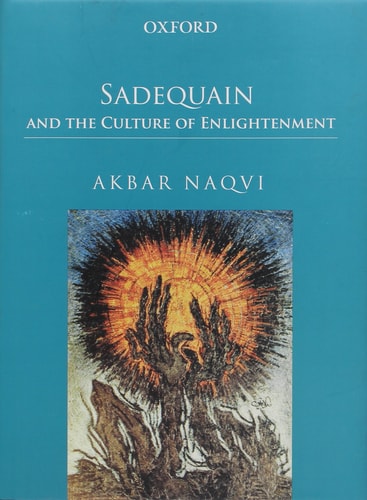
Sadequain and the Culture of Enlightenment
0
0
As an Amazon Associate and affiliate partner, Menrva Books earns from qualifying purchases. Learn more
Author Description
Although the artist Sadequain was commonly regarded as a modernist, the author, who is well known as an art critic and connoisseur, suggests that his art was most modern when he was traditional, and strictly traditional when modern. This prolific and versatile artist was a khattat (calligrapher), book binder, master of drawing, painter, and poet. Thus, in himself, he was a one-man traditional guild of the Muslim art of the Middle Ages, in which all of the above disciplines were in fact practised by different skilled persons. He thus revived the memory of this tradition in a modern visual vocabulary and syntax which would appeal to the people and stir their memory of loss, at the same time reinvigorating their pride. In his poetry, too, Sadequain reverted to the traditional, painting the tragedy and ecstasy of love for a universal beloved, typical of the Urdu ghazal. Thus, he created cathartic works of great pleasure in each of the traditional disciplines of Muslim Art. Each of the essays in this book opens a window on Sadequain and his roshan khayali, or enlightened culture, the culture of the enlightened people of the northern subcontinent, in Dr Naqvis interpretation of modern art.
Menrva's Summary
THE THESIS
This work investigates the paradox of Sadequain’s artistic identity, questioning how he synthesized medieval Islamic traditions with modern visual vocabularies to define a culture of enlightenment. Author Akbar Naqvi, a noted art critic, utilizes his extensive knowledge of South Asian art history to argue that Sadequain’s significance lies in his ability to function as a one-man traditional guild. By examining the artist’s multifaceted output, Naqvi posits that Sadequain’s work serves as a bridge between historical artistic disciplines and contemporary aesthetic expression.
THE SCOPE MAP
What You Will Find
- Analysis of Sadequain’s diverse technical mastery in calligraphy, bookbinding, drawing, painting, and poetry.
- Exploration of the roshan khayali, or enlightened culture, within the context of the northern subcontinent.
- Examination of the Urdu ghazal tradition as a thematic framework for the artist’s poetic and visual explorations of love.
- Critical interpretation of how traditional Muslim art forms were adapted into modern visual syntax.
THE AUTHORITY PERSPECTIVE
Scholars and art historians frequently cite this text as a foundational analysis of Sadequain’s complex position within the modernist movement. The book is recognized for its dense, critical prose that successfully contextualizes the artist’s work within the broader history of South Asian cultural evolution.
Page Count:
216
Publication Date:
2016-04-04
Publisher:
Oxford University Press
ISBN-10:
0199066485
ISBN-13:
9780199066483
Biography
Islamic Art
Modernism
Painting Asian
Art History
Community Tags
Similar Books