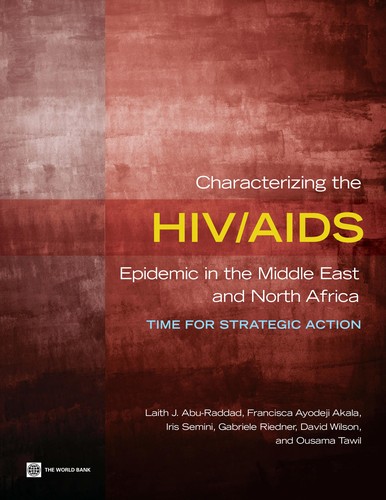
Characterizing the HIV/AIDS epidemic in the Middle East and North Africa
0
0
As an Amazon Associate and affiliate partner, Menrva Books earns from qualifying purchases. Learn more
Author Description
Despite a fair amount of progress on understanding human immunodeficiency virus (HIV) epidemiology globally, the Middle East and North Africa (MENA) region is the only region where knowledge of the epidemic continues to be very limited, and subject to much controversy. It has been more than 25 years since the discovery of HIV, but no scientific study has provided a comprehensive data-driven synthesis of HIV/AIDS (acquired immunodeficiency syndrome) infectious spread in this region. The current report provides the first comprehensive scientific assessment and data-driven epidemiological synthesis of HIV spread in MENA since the beginning of the epidemic. It is based on a literature review and analysis of thousands of widely unrecognized publications, reports, and data sources extracted from scientific literature or collected from sources at the local, national, and regional levels. The recommendations provided here focus on key strategies related to the scope of this report and its emphasis on understanding HIV epidemiology in MENA as a whole. The recommendations are based on identifying the status of the HIV epidemic in MENA, through this synthesis, as a low HIV prevalence setting with rising concentrated epidemics among priority populations. General directions for prevention interventions as warranted by the outcome of this synthesis are also discussed briefly, but are not delineated because they are beyond the scope of this report. This report was not intended to provide intervention recommendations for each MENA country.
Menrva's Summary
THE THESIS
This report presents the first comprehensive scientific assessment and data-driven epidemiological synthesis of HIV spread in the Middle East and North Africa (MENA) region since the epidemic's inception. The author, Laith J Abu-Raddad, addresses the significant knowledge gaps and controversies surrounding HIV epidemiology in MENA, a region where understanding has remained limited despite global progress. The study synthesizes findings from a literature review and analysis of thousands of publications, reports, and data sources at local, national, and regional levels. It characterizes the MENA HIV epidemic as a low prevalence setting with rising concentrated epidemics among priority populations, offering recommendations for understanding and addressing these trends.
THE SCOPE MAP
- Comprehensive scientific assessment of HIV spread in the MENA region.
- Data-driven epidemiological synthesis of the HIV/AIDS epidemic.
- Analysis of thousands of unrecognized publications, reports, and data sources.
- Identification of the HIV epidemic status in MENA as a low prevalence setting.
- Recognition of rising concentrated epidemics among priority populations.
- Recommendations focused on understanding HIV epidemiology in MENA.
- Discussion of general directions for prevention interventions.
THE AUTHORITY PERSPECTIVE
This comprehensive report is the first scientific assessment to synthesize HIV epidemiology in the MENA region, addressing a significant gap in knowledge and existing controversies. The analysis, based on extensive literature and data review, characterizes the epidemic as low prevalence with concentrated outbreaks in specific populations. The findings and recommendations aim to provide a clearer understanding of HIV spread across the region. The report's focus is on epidemiological synthesis rather than detailed country-specific intervention plans.
Page Count:
282
Publication Date:
2009-01-01
ISBN-10:
0821381377
ISBN-13:
9780821381373
Science
Non-Fiction
Health
North Africa
Public Health
Epidemiology
Middle East
Community Tags
Similar Books