The Faerie Queene: Book 1
0
0
As an Amazon Associate and affiliate partner, Menrva Books earns from qualifying purchases. Learn more
Author Description
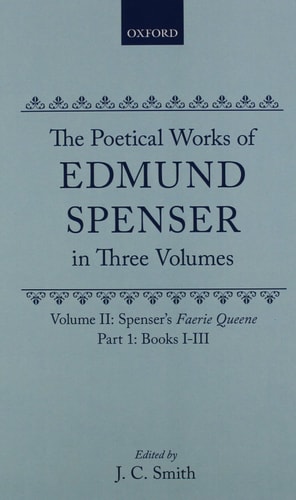
Book 1 presents a powerful allegory of the trials of good against evil. The Red Cross Knight with his companion, Una, sets out on a quest to rid the land of the dragon. The Knight is to become Saint George and his betrothal to Una signifies the union of the newly established Church with the faithful. But Spenser's tale moves beyond the allegory reflecting his experience of human frailty in an imaginative romantic narrative that draws on the quest plots of medieval literature and Italian romances. His unique diction with its newly-coined words and rich description adds to the antique flavour of The Legende of the Knight of the Red Crosse.
Menrva's Summary
THE PULSE
The Red Cross Knight embarks on a perilous quest to defeat a dragon and restore peace to the land, serving as a central allegory for the struggle between holiness and error. Guided by the virtuous Una, the Knight must navigate a series of deceptive encounters and spiritual trials that test his resolve and moral integrity. The narrative, composed in the intricate Spenserian stanza, follows the protagonist's development as he matures from a novice warrior into the embodiment of Saint George. The world is defined by shifting landscapes of enchantment and moral hazard, where physical obstacles frequently mirror the internal psychological state of the characters.
INSIDE THE PAGES
- Utilization of the complex nine-line Spenserian stanza rhyme scheme
- Heavy reliance on Christian and moral allegory
- Incorporation of Arthurian quest motifs and medieval romance tropes
- Use of archaic language and newly-coined vocabulary to establish atmosphere
- Vivid, sensory-rich descriptions of landscapes and monstrous entities
- Episodic structure typical of Renaissance epic poetry
- Integration of political and religious commentary relevant to the Elizabethan era
- Focus on the interplay between human frailty and divine grace
THE COLLECTIVE ECHO
Readers and critics frequently highlight the technical mastery of the verse, noting how the Spenserian stanza creates a rhythmic, hypnotic quality that sustains the narrative. Discussion often centers on the density of the allegorical layers, with many scholars debating the balance between the poem's theological intent and its purely aesthetic, romantic appeal. The atmosphere is consistently described as lush and immersive, though some readers find the archaic diction and length of the work to be significant barriers to entry. Ultimately, the text is regarded as a foundational pillar of English literature that rewards careful, slow reading rather than rapid consumption.
Page Count:
344
Publication Date:
1966-01-01
Publisher:
Oxford University Press
ISBN-10:
0199110115
ISBN-13:
9780199110117
Fantasy
Knights and Knighthood
Epic Poetry
Classic Literature
Allegory
Community Tags
Similar Books