Reducing Human Poverty
0
0
As an Amazon Associate and affiliate partner, Menrva Books earns from qualifying purchases. Learn more
Author Description
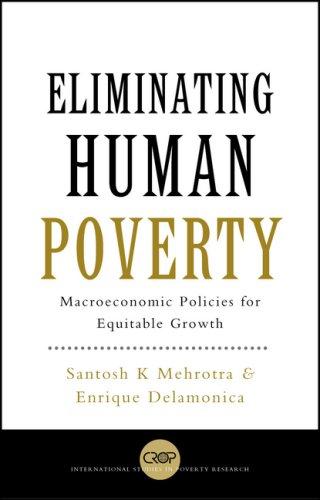
This examination of how basic social services, particularly education, health and water, can be financed and delivered more effectively departs from the dominant macro-economic paradigm. Drawing on their own broad-ranging research at UNICEF and UNDP, the authors argue that fiscal, monetary, and other macro-economic policies for poverty reduction, human development and economic growth can be compatible with micro-level interventions to provide basic social services. Policymakers have more flexibility than is usually assumed to engage in macro-economic and growth-oriented policies that can also expand human capabilities and fulfill human rights. More than just more aid is needed. Strategic shifts in aid policy, decentralized governance, health and education and the private-public mix in service provision are a prerequisite to achieve the goals of human development and to eliminate human poverty within a generation.
Menrva's Summary
THE THESIS
This book challenges the conventional macroeconomic approach to poverty reduction by advocating for effective financing and delivery of basic social services. The authors, drawing on their extensive research at UNICEF and UNDP, propose that macroeconomic policies for growth and poverty reduction can coexist with micro-level interventions for social services. They argue that policymakers possess greater flexibility than commonly believed to implement growth-oriented policies that simultaneously enhance human capabilities and uphold human rights. Achieving human development goals and eradicating poverty within a generation requires strategic shifts in aid policy, decentralized governance, and a re-evaluation of the public-private mix in service provision, rather than simply increased aid.
THE SCOPE MAP
- Analysis of financing and delivery mechanisms for basic social services, focusing on education, health, and water.
- Critique of dominant macroeconomic paradigms in poverty reduction strategies.
- Exploration of the compatibility between macroeconomic policies and micro-level social service interventions.
- Discussion of policy flexibility for expanding human capabilities and fulfilling human rights.
- Recommendations for strategic shifts in aid policy.
- Examination of decentralized governance models.
- Analysis of the public-private mix in service provision.
THE AUTHORITY PERSPECTIVE
The book offers a departure from standard macroeconomic thinking on poverty, emphasizing the critical role of social services. Its approach, grounded in research from international development organizations, suggests a more integrated strategy for human development. The authors advocate for policy flexibility and strategic changes in aid and governance to achieve poverty eradication. The work positions itself as a guide for policymakers seeking to balance economic growth with the expansion of human capabilities and rights.
Page Count:
0
Publication Date:
2006-01-01
ISBN-10:
1842777734
ISBN-13:
9781842777732
Business
Politics
Economics
Non-Fiction
Science
Public Policy
Poverty Reduction
Community Tags
Similar Books