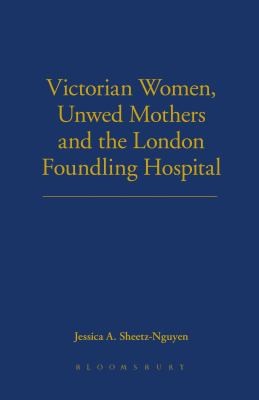
Victorian Women, Unwed Mothers, and the London Foundling Hospital
0
0
As an Amazon Associate and affiliate partner, Menrva Books earns from qualifying purchases. Learn more
Author Description
This volume seeks to address the questions of poverty, charity, and public welfare, taking the nineteenth-century London Foundling Hospital as its focus. It delineates the social rules that constructed the gendered world of the Victorian age, and uses 'respectability' as a factor for analysis: the women who successfully petitioned the Foundling Hospital for admission of their infants were not East End prostitutes, but rather unmarried women, often domestic servants, determined to maintain social respectability. The administrators of the Foundling Hospital reviewed over two hundred petitions annually; deliberated on about one hundred cases; and accepted not more than 25 per cent of all cases. Using primary material from the Foundling Hospital's extensive archives, this study moves methodically from the broad social and geographical context of London and the Foundling Hospital itself, to the micro-historical case data of individual mothers and infants.--Bloomsbury Publishing.
Menrva's Summary
THE THESIS
This volume investigates the complex interplay of poverty, charity, and public welfare in Victorian London, focusing on the Foundling Hospital and the women who sought its aid. The study examines the social rules that defined the Victorian era's gendered world, using 'respectability' as a key analytical factor. It reveals that the women petitioning the Foundling Hospital were often domestic servants or other unmarried women striving to maintain social standing, rather than solely those from the lowest strata of society. The Foundling Hospital administrators meticulously reviewed over two hundred petitions annually, deliberating on approximately one hundred cases, and accepting no more than 25 percent.
THE SCOPE MAP
- Analysis of the social rules and gendered expectations of the Victorian age.
- Examination of 'respectability' as a criterion for accessing charitable aid.
- Focus on unwed mothers and their petitions to the London Foundling Hospital.
- Detailed review of the Foundling Hospital's administrative processes and acceptance rates.
- Utilizes primary source material from the Foundling Hospital's extensive archives.
- Explores the broad social and geographical context of London and the hospital.
- Delves into micro-historical case data of individual mothers and infants.
THE AUTHORITY PERSPECTIVE
The book offers a detailed examination of social welfare and gender roles in Victorian London, utilizing the Foundling Hospital as a central case study. Its reliance on primary archival material provides a granular look at the lives of unwed mothers and the administrative decisions that shaped their access to charity. The analysis of 'respectability' as a factor in aid allocation highlights the nuanced social dynamics of the era. The work is positioned as a significant contribution to the understanding of poverty, public welfare, and women's history in the nineteenth century.
Page Count:
254
Publication Date:
2012-01-01
ISBN-10:
1441110925
ISBN-13:
9781441110923
History
Biography
Non-Fiction
Victorian Era
Poverty
Social History
Charity
Community Tags
Similar Books