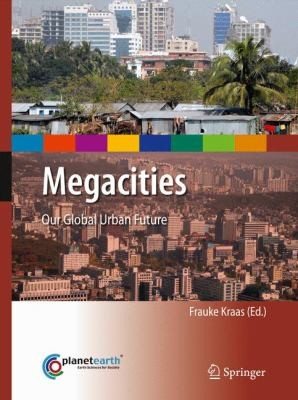
Megacities: Our Global Urban Future
0
0
As an Amazon Associate and affiliate partner, Menrva Books earns from qualifying purchases. Learn more
Author Description
As urbanization continues, and even accelerates, scientists estimate that by 2015 the world will have up to 60 ‘megacities’ – urban areas with more than five million inhabitants. With the irresistible economic attractions of urban centers, particularly in developing countries, making the influx of citizens unstoppable, many of humankind’s coming social, economic and political dramas will be played out in megacities. This book shows how geographers and Earth scientists are contributing to a better understanding of megacities. The contributors analyze the impact of socio-economic and political activities on environmental change and vice versa, and identify solutions to the worst problems. They propose ways of improving the management of megacities and achieving a greater degree of sustainability in their development. The goals, of wise use of human and natural resources, risk reduction (both social and environmental) and quality of life enhancement, are agreed upon. But, as this text proves, the means of achieving these ends are varied. Hence, chapters cover an array of topics, from health management in Indian megacities, to planning in New York, to transport solutions for the chronically traffic-choked Bangkok. Authors cover the impact of climate change on megacities, as well as less tangible issues such as socio-political fragmentation in the urban areas of Rio de Janeiro. This exploration of some of the most crucial issues that we face as a species sets out research that is of the utmost importance, with the potential to contribute substantially to global justice and peace – and thereby prosperity.
Menrva's Summary
THE THESIS
The accelerating growth of global urbanization presents unprecedented challenges and opportunities, particularly in the emergence of 'megacities' with over five million inhabitants. This book explores the critical role of geographers and Earth scientists in understanding these massive urban centers. It analyzes the complex interplay between socio-economic and political activities and environmental change, proposing solutions for improved management and sustainability. The contributors address diverse issues, from health management in Indian megacities to transportation in Bangkok and the impact of climate change on urban areas worldwide, aiming to enhance resource use, reduce risks, and improve quality of life.
THE SCOPE MAP
- Analysis of the impact of socio-economic and political activities on environmental change and vice versa.
- Identification of solutions to critical problems faced by megacities.
- Proposals for improving the management of megacities and achieving sustainability.
- Case studies on health management in Indian megacities.
- Examination of urban planning strategies in New York.
- Exploration of transport solutions for Bangkok.
- Discussion of the impact of climate change on megacities.
- Analysis of socio-political fragmentation in urban areas, such as Rio de Janeiro.
THE AUTHORITY PERSPECTIVE
This collection of research addresses the crucial issues surrounding global urbanization and the rise of megacities, aiming to contribute to global justice, peace, and prosperity. The diverse range of topics, from specific city case studies to broader environmental and social challenges, suggests a comprehensive overview of contemporary urban development. The focus on scientific and geographical contributions highlights a data-driven approach to understanding and managing complex urban systems. The book's scope indicates its relevance for academics, policymakers, and anyone concerned with the future of human settlements.
Page Count:
225
Publication Date:
2012-01-01
ISBN-10:
9048134161
ISBN-13:
9789048134168
Science
Non-Fiction
Sociology
Urban Studies
Geography
Community Tags
Similar Books