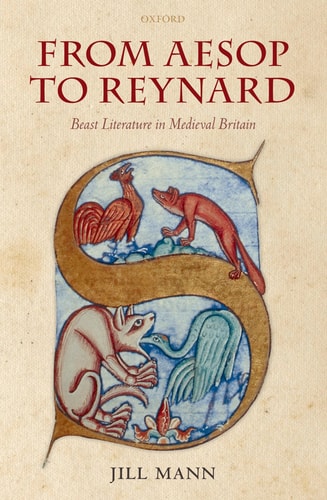
From Aesop to Reynard: Beast Literature in Medieval Britain
0
0
As an Amazon Associate and affiliate partner, Menrva Books earns from qualifying purchases. Learn more
Author Description
What do stories about animals have to tell us about human beings? This book analyzes the shrewd perceptions about human life - and especially human language - that emerge from narratives in which the main figures are 'talking animals'. Its guiding question is not 'what' but 'how' animals mean. Using this question to draw a clear distinction between beast fable and beast epic, it goes on to examine the complex variations of these forms that are to be found in the literature of medieval Britain, in English, French, Latin, and Scots. The range, variety, and brilliant inventiveness of this tradition are demonstrated in chapters on the fables of Marie de France, the Speculum stultorum of Nigel of Longchamp (the comic adventures of a donkey), the debate poem The Owl and the Nightingale, Chaucer's Parliament of Fowls and the tales of the Squire, Manciple and Nun's Priest, the Reynardian tale of The Fox and the Wolf, and the Moral Fabillis of Robert Henryson. English translations provided for all quotations make the works discussed accessible to the modern reader.
Menrva's Summary
THE THESIS
This book investigates how the use of animal figures in medieval literature serves as a sophisticated mechanism for exploring the complexities of human nature and the nuances of language. Jill Mann, a distinguished scholar of medieval literature, utilizes a comparative framework to distinguish between the structural conventions of the beast fable and the beast epic. By analyzing a diverse range of texts from medieval Britain, she argues that these narratives function as critical tools for understanding the intersection of animal symbolism and human social behavior.
THE SCOPE MAP
What You Will Find
- A comparative analysis of beast fables and beast epics across English, French, Latin, and Scots literary traditions.
- Detailed examinations of specific works including Marie de France’s fables, Nigel of Longchamp’s Speculum stultorum, and Chaucer’s Parliament of Fowls.
- A methodological focus on the semiotics of animal characters, specifically how they 'mean' rather than what they represent.
- Inclusion of English translations for all original quotations to facilitate accessibility for modern readers.
THE AUTHORITY PERSPECTIVE
Scholars and students of medieval literature frequently cite this work as a definitive resource for understanding the evolution of animal allegory in the Middle Ages. The text is noted for its academic rigor and its ability to synthesize complex linguistic and historical contexts into a coherent analytical framework.
Page Count:
448
Publication Date:
2010-01-11
Publisher:
Oxford University Press
ISBN-10:
0199217688
ISBN-13:
9780199217687
History
In literature
Literary Criticism
Folklore
Academic
Community Tags
Similar Books