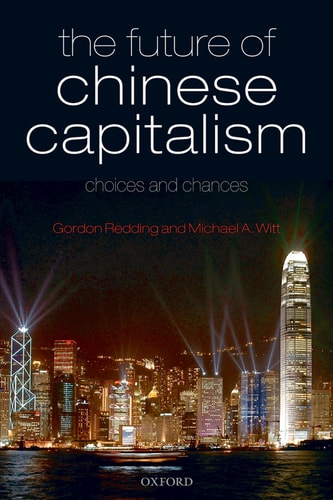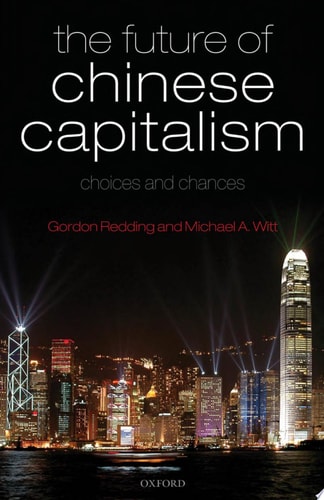
The Future of Chinese Capitalism
0
0
As an Amazon Associate and affiliate partner, Menrva Books earns from qualifying purchases. Learn more
Author Description
Much has been said about the re-emergence of China to its historical position of eminence in the world economy, yet little is understood about the kind of economic system China is evolving. What are the rules of the game of business in today's China, and how are they likely to change over the next decades? The answers to these questions are crucial to business persons formulating strategy toward China, but also for policy-makers concerned with retaining the competitiveness of their nations in the face of Chinese competition and for researchers seeking to gain deeper insights into the workings of economic systems and institutional change.Written by two leading experts in the field, this book sheds much-needed light on these questions. Building on recent conceptual and empirical advances, and rich in concrete examples, it offers a comprehensive and systematic exploration of present-day Chinese capitalism, its component parts, and their interdependencies. It suggests that Chinese capitalism, as practiced today, in many respects represents a development from traditional business practices, whose revival has been greatly aided by the influx of investments and managerial talent from the Regional Ethnic Chinese. On the basis of present trends in the Chinese economy as well as through comparison with five major types of capitalism-those of France, Germany, Japan, Korea, and the United States-the book derives a prediction of the probable development paths of Chinese capitalism and its likely competitive strengths and weaknesses.
Menrva's Summary
THE THESIS
This book investigates the structural evolution of the Chinese economic system to determine the rules governing its business environment and its trajectory over the coming decades. Authors Gordon M. Redding and Michael A. Witt, both recognized experts in international business and institutional economics, synthesize empirical data and conceptual frameworks to analyze the unique characteristics of Chinese capitalism. They argue that the current system is a distinct development rooted in traditional practices, further shaped by regional ethnic investment and global integration. By comparing China against the established capitalist models of the United States, Germany, Japan, Korea, and France, the authors provide a predictive framework for understanding China's future competitive standing.
THE SCOPE MAP
What You Will Find
- Comparative analysis of Chinese capitalism against five major global economic models.
- Examination of the role of Regional Ethnic Chinese investment in shaping domestic business practices.
- Systematic breakdown of the interdependencies within the Chinese economic structure.
- Predictive modeling regarding the future competitive strengths and weaknesses of the Chinese market.
THE AUTHORITY PERSPECTIVE
Experts and researchers frequently cite this work as a foundational text for understanding the institutional mechanics of the Chinese economy. Readers often note the academic rigor and the systematic approach the authors employ to demystify complex economic trends.
Page Count:
275
Publication Date:
2008-02-03
Publisher:
Oxford University Press
ISBN-10:
0199218137
ISBN-13:
9780199218134
Business
Economics
Capitalism
China
International relations
Community Tags
Similar Books