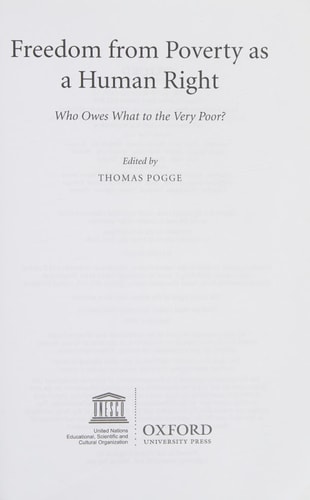
Freedom from Poverty As a Human Right: Who Owes What to the Very Poor?
0
0
As an Amazon Associate and affiliate partner, Menrva Books earns from qualifying purchases. Learn more
Author Description
Collected here in one volume are fifteen cutting-edge essays by leading academics which together clarify and defend the claim that freedom from poverty is a human right with corresponding binding obligations on the more affluent to practice effective poverty avoidance. The nature of human rights and their corresponding duties is examined, as is the theoretical standing of the social, economic and cultural rights. The authors largely agree in concluding that there is a human right to be free from poverty and that this right is massively violated by the present world economy which creates huge unfair imbalances in income and wealth among and within countries. This searing indictment of the status quo is all the more powerful as the authors endorsing it exemplify diverse philosophical methods and moral traditions and also highlight different aspects of poverty and global institutional arrangements.This volume will be of great interest and value to academics working in the fields of philosophy, political science and international relations, as well as to undergraduate and graduate students in these disciplines. It will also be a crucial aid and challenge to practitioners in international governmental organizations (such as the UN and its agencies) and NGOs who think of their work in human-rights terms. Indeed, in view of the magnitude of the human rights deficit at issue, any moral citizen has reason to engage with the arguments of this book. And the book makes this possible for most in that, throughout, even the most complex aspects of rights theory is discussed in clear, direct language, making the text accessible to specialists and lay readers alike.This volume is co-published with UNESCO publishing.
Menrva's Summary
THE THESIS
This collection of essays investigates the core question of whether freedom from poverty constitutes a fundamental human right and identifies the specific moral obligations that affluent societies owe to the impoverished. Thomas W. Pogge, a prominent philosopher, curates a series of contributions from leading academics who utilize diverse moral traditions and philosophical frameworks to analyze the current global economic order. The authors argue that the existing international institutional arrangements systematically violate human rights by perpetuating extreme wealth imbalances, thereby necessitating a reevaluation of global duty and responsibility.
THE SCOPE MAP
What You Will Find
- Theoretical analysis of social, economic, and cultural rights within a global context.
- Critical examination of how current international economic structures contribute to systemic poverty.
- Diverse philosophical methodologies applied to the ethics of global wealth distribution.
- Practical implications for international governmental organizations and non-governmental entities.
THE AUTHORITY PERSPECTIVE
Experts and academics recognize this volume as a significant contribution to the discourse on global justice and human rights theory. Readers frequently note that the text maintains a high level of intellectual rigor while remaining accessible to both specialists and informed laypeople interested in international policy.
Page Count:
425
Publication Date:
2007-08-23
Publisher:
UNESCO
ISBN-10:
0199226180
ISBN-13:
9780199226184
Economics
Philosophy
Poverty
International relations
Responsibility
Social justice
Ethics
Human rights
Community Tags
Similar Books