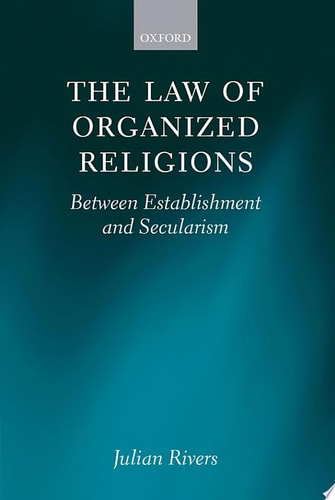
The Law of Religious Organizations: Between Establishment and Secularism
0
0
As an Amazon Associate and affiliate partner, Menrva Books earns from qualifying purchases. Learn more
Author Description
The Law of Religious Organizations, provides the first modern systematic account of the English law relating to religious organizations. It introduces the subject through an historical overview of the relationship between church and state, and a depiction of contemporary patterns and structures of organized faith. It considers in depth the emerging human rights law of religious associations, the legal constitution of religious bodies, the status of ministers of religion and legal privileges associated with public religion.Subsequent chapters examine the legal regulation of major aspects of religious life, including rituals, faith-based education and the delivery of faith-based welfare services. The book also considers broader questions of the legal regulation of religion in public life, from access to public discourse through formal and informal governmental consultation processes to safeguarding the presence of religious voices in the regulated mass media.The final chapter draws together the author's reflections on trends at a broader level of constitutional theory. It argues that modern constitutional law occupies an uncertain position between establishment and secularism. While accepting a version of the secularization thesis in respect of English law, the author identifies but rejects legal secularism as a specific alternative to establishment. Instead, he argues for the clearer recognition of constitutional principles of autonomy and neutrality in the regulation of religious life.The principal focus of the book is the law as it applies to non-established religions, but comparative reference is made throughout to the position of the Church of England. It emphasises the recent historical development of the law as an essential key to understanding current controversies and possible future resolutions.
Menrva's Summary
THE THESIS
This book investigates the core question of how English law navigates the tension between established religious traditions and the increasing pressure of secularism in a modern constitutional framework. Julian Rivers, a professor of jurisprudence, utilizes a comprehensive analysis of historical precedents and contemporary legal statutes to argue that the current system is caught in an uncertain middle ground. He posits that while secularization is a reality, legal secularism is an insufficient alternative, advocating instead for a constitutional model rooted in autonomy and neutrality.
THE SCOPE MAP
What You Will Find
- Historical overview of the relationship between the Church of England and the state.
- Analysis of human rights law as it pertains to religious associations and their internal constitutions.
- Examination of the legal status of ministers, faith-based education, and welfare service delivery.
- Theoretical exploration of constitutional principles regarding religious access to public discourse and mass media.
THE AUTHORITY PERSPECTIVE
Legal scholars and practitioners recognize this work as a foundational text for understanding the complexities of religious regulation within the English legal system. Experts frequently highlight the depth of the author's constitutional analysis and the clarity with which he addresses the intersection of historical tradition and modern human rights law.
Page Count:
400
Publication Date:
2010-09-17
Publisher:
Oxford University Press
ISBN-10:
0199226105
ISBN-13:
9780199226108
Religion
Great Britain
Human rights
Law
Constitutional Law
Sociology of Religion
Community Tags
Similar Books