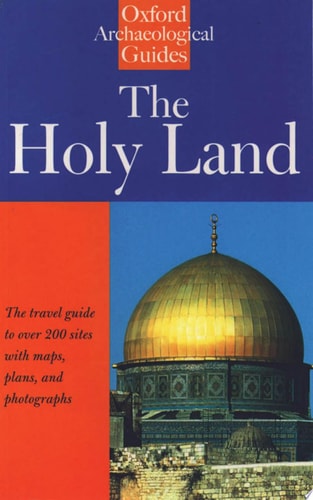
The Holy Land: An Oxford Archaeological Guide
0
0
As an Amazon Associate and affiliate partner, Menrva Books earns from qualifying purchases. Learn more
Author Description
The geographic heart and soul of Judaism, Islam, and Christianity, the Holy Land has immense significance for the millions of visitors it has attracted since as early as the fifth century BC. Now in an exciting new edition, this popular handbook once again offers tourists an indispensable, illustrated guide to over 200 of the most important archeological and religious sites in the City of Jerusalem and the surrounding area.Fully updated with all the latest information, The Holy Land presupposes little knowledge of history or archaeology, giving clear directions on how to find sites and monuments of interest both well known locations and those less familiar. With entries including the Damascus Gate, the Via Dolorosa, Mount Sion, the Dead Sea, Hebron, and Jericho, this indispensable book includes detailed maps, plans, and illustrations that further illuminate these spectacular locales. Each entry explains the history and topography of a site as well as its function and significance. In his introduction, Father Jerome Murphy O'Connor provides a brief historical outline of the Holy Land, from the Stone Age to the Modern Period, and lists sites accordingly. The Fifth Edition includes new information on the crucial recent developments at the Holy Sepulchre and on six completely new sites, including a Middle Bronze Age water system in Jerusalem and what may be the original Pool of Siloam.A marvelous Baedeker to both the city of Jerusalem and the Holy Land, brimming with practical advice and featuring more than 150 high quality site plans, maps, diagrams, and photographs, this book provides the ultimate visitor's guide to one of the richest archaeological regions in the world.
Menrva's Summary
THE THESIS
This guide investigates the historical and archaeological significance of over 200 religious and cultural sites within the Holy Land to provide a practical resource for visitors. Father Jerome Murphy-O'Connor, a respected scholar in the field, utilizes his extensive expertise to synthesize complex historical data into an accessible format. The text provides a chronological framework from the Stone Age to the modern era, ensuring that readers can contextualize the physical remains they encounter. By combining topographical analysis with historical narrative, the author offers a comprehensive methodology for understanding the region's layered past.
THE SCOPE MAP
What You Will Find
- Detailed entries for over 200 archaeological and religious sites, including Jerusalem, the Dead Sea, Hebron, and Jericho.
- Practical navigation tools, including site plans, maps, diagrams, and photographs to assist in field exploration.
- A chronological historical outline spanning from the Stone Age to the Modern Period.
- Updated research regarding recent developments at the Holy Sepulchre and newly identified sites like the Pool of Siloam.
THE AUTHORITY PERSPECTIVE
Experts and travelers alike recognize this work as a foundational reference for navigating the complex archaeological landscape of the region. Readers frequently note the clarity of the prose and the utility of the detailed site plans, which make the text accessible to both casual tourists and serious students of history.
Page Count:
576
Publication Date:
2008-03-20
Publisher:
Oxford University Press
ISBN-10:
0199236666
ISBN-13:
9780199236664
Travel
Religion
History
Palestine
Guidebook
Middle East
Archaeology
Community Tags
Similar Books