The Invention of Telepathy: 1870-1901
0
0
As an Amazon Associate and affiliate partner, Menrva Books earns from qualifying purchases. Learn more
Author Description
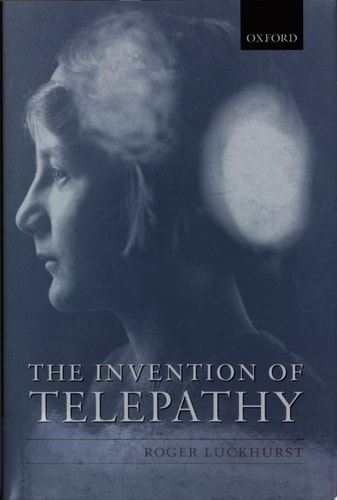
The belief in telepathy is still widely held and yet it remains much disputed by scientists. Roger Luckhurst explores the origins of the term in the late nineteenth century. Telepathy mixed physical and mental sciences, new technologies and old superstitions, and it fascinated many famous people in the late Victorian era: Sigmund Freud, Thomas Huxley, Henry James, Robert Louis Stevenson, and Oscar Wilde. This is an exciting and accessible study, written for general readers as much as scholars and students.
Menrva's Summary
THE THESIS
This book investigates the historical emergence and cultural integration of the concept of telepathy within the scientific and intellectual landscape of the late nineteenth century. Roger Luckhurst, a scholar of Victorian literature and culture, utilizes a wide array of primary sources, including scientific journals, personal correspondence, and literary texts, to trace how telepathy functioned as a bridge between emerging physical sciences and persistent occult interests. He argues that the term was not merely a fringe belief but a central point of intersection for the era's anxieties regarding technology, consciousness, and the limits of human perception.
THE SCOPE MAP
What You Will Find
- A detailed historical analysis of the period between 1870 and 1901.
- Examination of the influence of telepathy on prominent figures such as Sigmund Freud, Henry James, and Oscar Wilde.
- Exploration of the intersection between Victorian technological advancements and spiritualist practices.
- A critical framework for understanding how telepathy served as a metaphor for modern communication and mental connectivity.
THE AUTHORITY PERSPECTIVE
Experts and historians frequently cite this work as a definitive study on the intersection of Victorian science and the occult. Readers often note the academic rigor of the prose while appreciating its accessibility to those interested in the history of ideas.
Page Count:
320
Publication Date:
2002-08-22
Publisher:
Oxford University Press
ISBN-10:
0199249628
ISBN-13:
9780199249626
History
Psychology
Science
Victorian Era
Telepathy
Community Tags
Similar Books