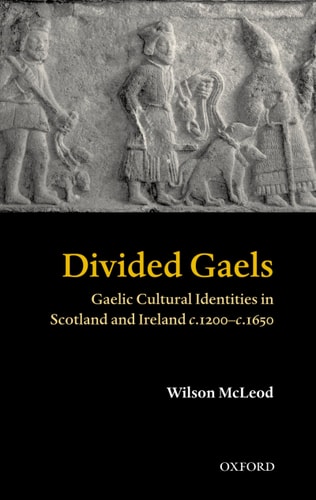
Divided Gaels: Gaelic Cultural Identities in Scotland and Ireland 1200-1650
0
0
As an Amazon Associate and affiliate partner, Menrva Books earns from qualifying purchases. Learn more
Author Description
In this detailed and absorbing study, Wilson McLeod challenges the familiar view that Gaelic Scotland and Gaelic Ireland formed a cultural unit during the late middle ages and early modern period. Dr McLeod's examination of the surviving sources, especially formal bardic poetry, shows that Ireland was culturally dominant. While Scottish Gaeldom attached great significance to the Irish connection, Irish Gaeldom, McLeod argues, perceived Scotland as peripheral.
Menrva's Summary
THE THESIS
This study investigates the historical divergence between Gaelic cultural identities in Scotland and Ireland between 1200 and 1650. Wilson McLeod, a scholar specializing in Gaelic literature and history, utilizes a rigorous analysis of surviving primary sources to challenge the traditional academic consensus that these two regions functioned as a singular, unified cultural entity. By examining the nuances of bardic poetry and political discourse, the author argues that a significant asymmetry existed in how each region perceived the other, with Ireland occupying a position of cultural dominance while Scotland remained viewed as a peripheral territory.
THE SCOPE MAP
What You Will Find
- Analysis of formal bardic poetry as a primary historical source for cultural identity.
- Comparative study of political and social structures in Gaelic Scotland and Ireland.
- Examination of the period between 1200 and 1650, covering the late middle ages through the early modern era.
- Evidence regarding the perceived hierarchy between Irish and Scottish Gaelic centers of power.
THE AUTHORITY PERSPECTIVE
Scholars and historians frequently cite this work as a critical intervention in the study of Gaelic identity, noting the author's meticulous use of linguistic and literary evidence. The text is recognized for its academic rigor and is considered a foundational resource for those researching the cultural intersections of the British Isles during this period.
Page Count:
304
Publication Date:
2004-03-25
Publisher:
Oxford University Press
ISBN-10:
0199247226
ISBN-13:
9780199247226
History
Ireland
Celts
Scotland
Gaelic Studies
Cultural History
European History
Community Tags
Similar Books