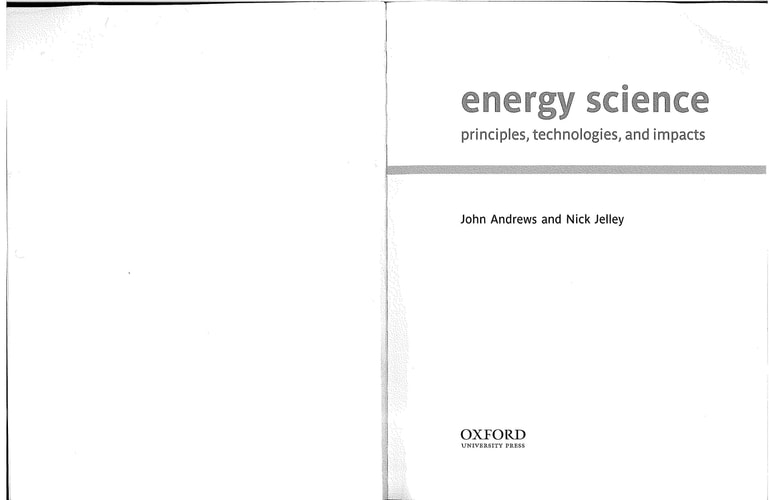
Energy Science: Principles, Technologies, and Impacts
0
0
As an Amazon Associate and affiliate partner, Menrva Books earns from qualifying purchases. Learn more
Author Description
Do renewable energy sources really provide a realistic alternative to fossil fuels? How does wind power compare to nuclear power, in terms of the energy it can generate? How do we get energy from the tides, and is it really a useful source of power?Energy Science: Principles, Technologies, and Impacts integrates the science behind the key energy sources that are at our disposal today with the socioeconomic issues surrounding their use to give a balanced, objective overview of the range of energy sources available to us today. Covering both traditional and renewable energy sources, the book encourages the reader to evaluate different energy sources on the basis of sound quantitative understanding. It also explores the fundamental processes of energy generation, storage, and transmission, building a complete picture of energy supply and use--from wind turbines, nuclear reactors, and hydroelectric dams--to our homes.Different energy sources have different social and economic impacts; the book uses examples and case studies throughout to help the reader critically assess the information to hand surrreach a well-rounded, informed view of the relative merits and drawbacks of the utilization of various energy sources.Problems with current and future energy use and supply extend globally; Energy Science: Principles, Technologies, and Impacts introduces the potential solutions that science can offer, within a framework that encourages the critical assessment of the pros and cons of each.Online resource centre:The Online Resource Centre features:For lecturers:Figures from the book available to download, to facilitate lecture preparationSolutions to end of chapter questionsFor students:Library of web links, giving students quick access to an extensive range of additional resourcesHyperlinks to primary literature articles cited in the text, to encourage students to explore topics in more detail
Menrva's Summary
THE THESIS
This text investigates the fundamental scientific principles, technological mechanisms, and socioeconomic impacts of global energy production and consumption. Authors John Andrews and Nick Jelley utilize their academic backgrounds to provide a quantitative framework for evaluating both traditional fossil fuels and renewable alternatives. By synthesizing physical data with economic considerations, the authors argue for a balanced, evidence-based approach to understanding the complexities of the modern energy landscape.
THE SCOPE MAP
What You Will Find
- Quantitative analysis of energy generation, storage, and transmission technologies.
- Comparative assessments of wind, nuclear, hydroelectric, and fossil fuel power sources.
- Case studies illustrating the social and economic consequences of specific energy policies.
- A structured framework for evaluating the viability and limitations of diverse energy systems.
THE AUTHORITY PERSPECTIVE
Experts and educators frequently cite this work as a foundational, balanced text for undergraduate students and professionals seeking a technical overview of energy systems. Readers often note the clarity of the prose and the effectiveness of the quantitative examples in demystifying complex energy challenges.
Page Count:
344
Publication Date:
2007-03-03
Publisher:
Oxford University Press
ISBN-10:
0199281122
ISBN-13:
9780199281121
Science
Environment
Engineering
Power Resources
Energy
Technology
Physics
Community Tags
Similar Books