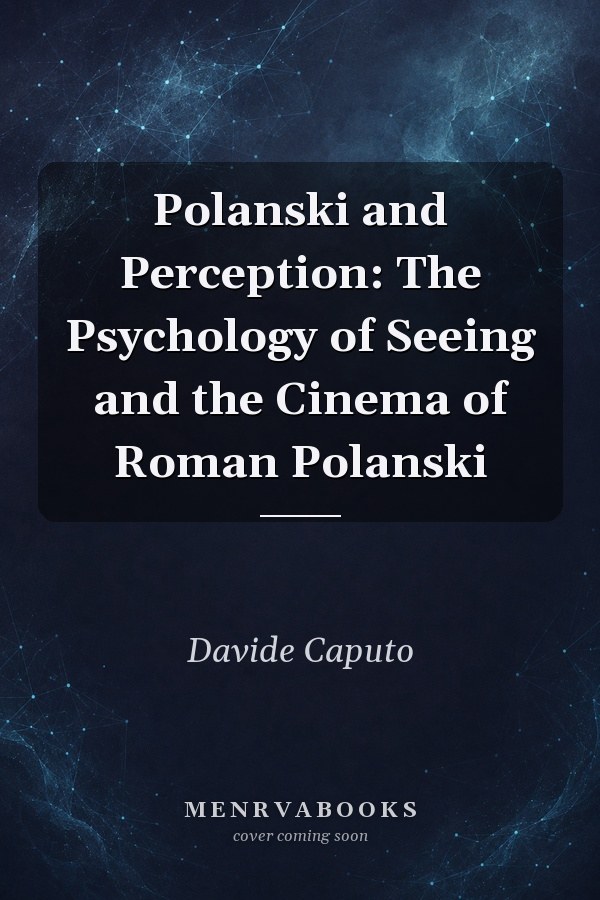
Polanski and Perception: The Psychology of Seeing and the Cinema of Roman Polanski
0
0
As an Amazon Associate and affiliate partner, Menrva Books earns from qualifying purchases. Learn more
Author Description
A new approach to a director whose contribution to cinema is often overshadowed his personal life, Polanski and Perception focuses on Roman Polanski's interest in the nature of perception and how this is manifested in his films. The incorporation of cognitive research into film theory is becoming increasingly widespread, with novel cinematic technologies and recent developments in digital projection making a strong grasp of perceptual psychology critical to fostering cognitive engagement. Informed by the work of neuropsychologist R. L. Gregory, this volume focuses primarily on two sets of films: the Apartment trilogyof Repulsion, Rosemary's Baby, and The Tenant; and the Investigation trilogy of Chinatown, Frantic, and The Ninth Gate. Also included are case studies of Knife in the Water, Death and the Maiden, and The Ghost. Polanski and Perception presents a highly original and engaging new look at the work of this influential filmmaker.
Menrva's Summary
THE THESIS
This volume investigates how Roman Polanski's cinematic works explore the nature of perception and its psychological underpinnings. Davide Caputo, informed by neuropsychologist R. L. Gregory's work, analyzes Polanski's films through the lens of cognitive research and perceptual psychology. The book primarily examines two trilogies: the 'Apartment trilogy' (Repulsion, Rosemary's Baby, The Tenant) and the 'Investigation trilogy' (Chinatown, Frantic, The Ninth Gate), with additional case studies on Knife in the Water, Death and the Maiden, and The Ghost. It argues for a new understanding of Polanski's contribution to cinema, distinct from his personal life, by focusing on the cognitive engagement fostered by his visual and narrative techniques.
THE SCOPE MAP
- Analysis of Roman Polanski's filmography through the framework of perceptual psychology.
- Focus on the 'Apartment trilogy': Repulsion, Rosemary's Baby, and The Tenant.
- Focus on the 'Investigation trilogy': Chinatown, Frantic, and The Ninth Gate.
- Case studies of Knife in the Water, Death and the Maiden, and The Ghost.
- Incorporation of cognitive research and neuropsychological findings (R. L. Gregory).
- Exploration of how cinematic technologies and digital projection influence perceptual engagement.
- A new approach to understanding Polanski's directorial contributions by separating them from his personal life.
THE AUTHORITY PERSPECTIVE
The book presents a novel approach to analyzing Roman Polanski's filmography, centering on his engagement with the psychology of perception. By integrating cognitive research with film theory, it offers a fresh perspective on his directorial contributions, distinct from biographical interpretations. The analysis is structured around key film groups, including the 'Apartment trilogy' and 'Investigation trilogy,' alongside specific case studies. This methodical examination aims to provide a deeper understanding of how Polanski's films manipulate viewer perception.
Page Count:
286
Publication Date:
2012-01-01
ISBN-10:
1841505528
ISBN-13:
9781841505527
Psychology
Non-Fiction
Cinema
Film Studies
Filmmaking
Perception
Community Tags
Similar Books