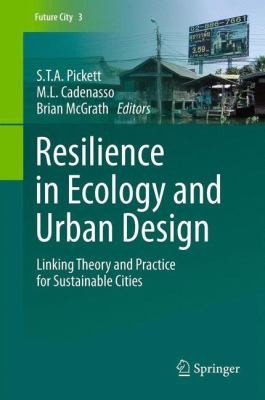
Resilience in Ecology and Urban Design
0
0
As an Amazon Associate and affiliate partner, Menrva Books earns from qualifying purchases. Learn more
Author Description
The contributors to this volume propose strategies of urgent and vital importance that aim to make today’s urban environments more resilient. Resilience, the ability of complex systems to adapt to changing conditions, is a key frontier in ecological research and is especially relevant in creative urban design, as urban areas exemplify complex systems. With something approaching half of the world’s population now residing in coastal urban zones, many of which are vulnerable both to floods originating inland and rising sea levels, making urban areas more robust in the face of environmental threats must be a policy ambition of the highest priority. The complexity of urban areas results from their spatial heterogeneity, their intertwined material and energy fluxes, and the integration of social and natural processes. All of these features can be altered by intentional planning and design. The complex, integrated suite of urban structures and processes together affect the adaptive resilience of urban systems, but also presupposes that planners can intervene in positive ways. As examples accumulate of linkage between sustainability and building/landscape design, such as the Shanghai Chemical Industrial Park and Toronto’s Lower Don River area, this book unites the ideas, data, and insights of ecologists and related scientists with those of urban designers. It aims to integrate a formerly atomized dialog to help both disciplines promote urban resilience.
Menrva's Summary
THE THESIS
This volume explores strategies for enhancing the resilience of urban environments to environmental threats. The contributors, a blend of ecologists and urban designers, address the urgent need to adapt complex urban systems, particularly coastal zones vulnerable to floods and rising sea levels. The book posits that understanding the spatial heterogeneity, material fluxes, and integrated social and natural processes of cities allows for intentional planning and design interventions to bolster adaptive resilience.
THE SCOPE MAP
- Strategies for making urban environments more resilient to changing conditions.
- The application of ecological research on complex systems to urban design.
- Addressing the vulnerability of coastal urban zones to floods and rising sea levels.
- Analysis of the complexity of urban areas, including spatial heterogeneity and material/energy fluxes.
- Integration of social and natural processes in urban planning.
- Case studies of successful linkages between sustainability and design, such as the Shanghai Chemical Industrial Park and Toronto’s Lower Don River area.
- Bridging the dialogue between ecologists and urban designers to promote urban resilience.
THE AUTHORITY PERSPECTIVE
The book aims to integrate a formerly atomized dialogue between ecologists and urban designers, presenting ideas, data, and insights to promote urban resilience. The premise suggests a focus on practical strategies and theoretical frameworks for adapting urban systems to environmental challenges. The collection of diverse perspectives likely offers a comprehensive overview of the interdisciplinary approaches needed for sustainable urban development. The emphasis on real-world examples indicates a practical orientation for planners and designers.
Page Count:
499
Publication Date:
2012-01-01
ISBN-10:
9400753438
ISBN-13:
9789400753433
Science
Non-Fiction
Design
Ecology
urban planning
Sustainability
Community Tags
Similar Books