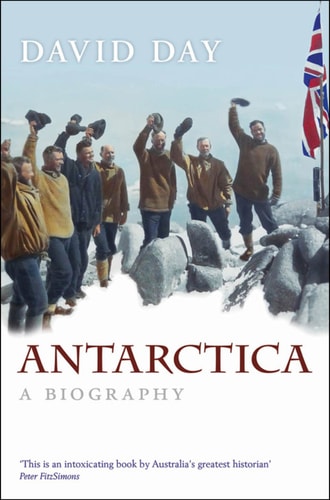
Antarctica: A Biography
0
0
As an Amazon Associate and affiliate partner, Menrva Books earns from qualifying purchases. Learn more
Author Description
Since the first sailing ships spied the Antarctic coastline in 1820, the frozen continent has captured the world's imagination. David Day's brilliant biography of Antarctica describes in fascinating detail every aspect of this vast land's history--two centuries of exploration, scientific investigation, and contentious geopolitics. Drawing from archives from around the world, Day provides a sweeping, large-scale history of Antarctica. Focusing on the dynamic personalities drawn to this unconquered land, the book offers an engaging collective biography of explorers and scientists battling the elements in the most hostile place on earth. We see intrepid sea captains picking their way past icebergs and pushing to the edge of the shifting pack ice, sanguinary sealers and whalers drawn south to exploit "the Penguin El Dorado," famed nineteenth-century explorers like Scott and Amundson in their highly publicized race to the South Pole, and aviators like Clarence Ellsworth and Richard Byrd, flying over great stretches of undiscovered land. Yet Antarctica is also the story of nations seeking to incorporate the Antarctic into their national narratives and to claim its frozen wastes as their own. As Day shows, in a place as remote as Antarctica, claiming land was not just about seeing a place for the first time, or raising a flag over it; it was about mapping and naming and, more generally, knowing its geographic and natural features. And ultimately, after a little-known decision by FDR to colonize Antarctica, claiming territory meant establishing full-time bases on the White Continent. The end of the Second World War would see one last scramble for polar territory, but the onset of the International Geophysical Year in 1957 would launch a cooperative effort to establish scientific bases across the continent. And with the Antarctic Treaty, science was in the ascendant, and cooperation rather than competition was the new watchword on the ice.
Menrva's Summary
THE THESIS
This work investigates the historical, geopolitical, and scientific evolution of Antarctica from its initial discovery to its status as a site of international cooperation. David Day, a historian specializing in polar studies, utilizes extensive archival research to construct a narrative that treats the continent as a central character. He examines how individual explorers, commercial interests, and competing nations have shaped the identity of the White Continent over two centuries. The text argues that the history of Antarctica is defined by the tension between territorial ambition and the eventual shift toward scientific collaboration.
THE SCOPE MAP
What You Will Find
- A comprehensive timeline of Antarctic exploration from 1820 to the late twentieth century.
- Analysis of the geopolitical strategies employed by nations to claim sovereignty over frozen territories.
- Biographical sketches of key figures including Scott, Amundson, and Richard Byrd.
- Examination of the transition from resource exploitation by sealers and whalers to the cooperative framework of the Antarctic Treaty.
THE AUTHORITY PERSPECTIVE
Experts recognize this work as a thorough and accessible synthesis of polar history that effectively balances individual narratives with broader geopolitical trends. Readers frequently note the clarity of the prose and the author's ability to manage a vast amount of archival data without sacrificing readability.
Page Count:
589
Publication Date:
2013-01-01
Publisher:
Oxford University Press
ISBN-10:
0199323623
ISBN-13:
9780199323623
Science
Politics
History
Biography
Antarctica
Geography
Special Topics
Exploration
Community Tags
Other Editions(2)

Similar Books







Reader Comments
Share Your Thoughts
No comments yet. Be the first to share your thoughts!