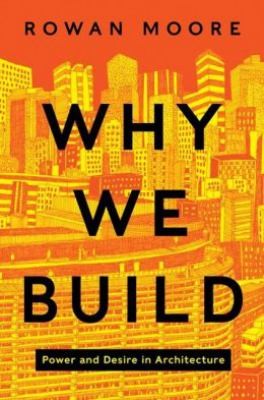
Why We Build: Power and Desire in Architecture
0
0
As an Amazon Associate and affiliate partner, Menrva Books earns from qualifying purchases. Learn more
Author Description
In an era of brash, expensive, provocative new buildings, a prominent critic argues that emotions such as hope, power, sex, and our changing relationship to the idea of home are the most powerful force behind architecture, yesterday and (especially) today. We are living in the most dramatic period in architectural history in more than half a century: a time when cityscapes are being redrawn on a yearly basis, architects are testing the very idea of what a building is, and whole cities are being invented overnight in exotic locales or here in the United States. Now, in a bold and wide-ranging new work, Rowan Moore former director of the Architecture Foundation, now the architecture critic for The Observer explores the reasons behind these changes in our built environment, and how they in turn are changing the way we live in the world. Taking as his starting point dramatic examples such as the High Line in New York City and the outrageous island experiment of Dubai, Moore then reaches far and wide: back in time to explore the Covent Garden brothels of eighteenth-century London and the fetishistic minimalism of Adolf Loos; across the world to assess a software magnate's grandiose mansion in Atlanta and Daniel Libeskind's failed design for the World Trade Center site; and finally to the deeply naturalistic work of Lina Bo Bardi, whom he celebrates as the most underrated architect of the modern era.
Menrva's Summary
THE THESIS
Architecture is driven by fundamental human desires and societal forces, not just aesthetics or function. Rowan Moore, a prominent critic, argues that emotions like hope, power, sex, and our evolving concept of home are the primary engines behind architectural creation throughout history and especially in the present day. The book examines the current dramatic period in architectural history, marked by rapidly changing cityscapes, experimental building designs, and the rapid invention of new urban environments. Moore uses specific examples, from New York's High Line and Dubai's ambitious developments to historical sites and overlooked modern architects, to illustrate how these powerful human elements shape our built world and, in turn, our lives.
THE SCOPE MAP
- Analysis of contemporary architectural trends and their emotional underpinnings.
- Exploration of historical examples, including 18th-century London and the work of Adolf Loos.
- Case studies of significant modern projects like the High Line and Daniel Libeskind's World Trade Center design.
- Examination of extreme architectural developments, such as Dubai and a software magnate's mansion.
- Appreciation of overlooked architects, specifically Lina Bo Bardi.
- Discussion on the changing relationship between individuals and the concept of 'home'.
- Investigation into the role of power, sex, and hope in architectural design.
THE AUTHORITY PERSPECTIVE
Rowan Moore's work is recognized for its insightful critique of contemporary architecture, moving beyond purely aesthetic considerations to explore the deeper human emotions and societal forces that drive building design. The book is noted for its broad scope, connecting historical precedents with present-day phenomena and offering a compelling argument for the emotional core of architecture. Critics have highlighted Moore's ability to synthesize complex ideas and present them through engaging examples, making the subject accessible to a wide audience. The analysis of specific projects and architects provides a rich context for understanding the motivations behind our built environment.
Page Count:
392
Publication Date:
2013-01-01
ISBN-10:
0062277537
ISBN-13:
9780062277534
History
Non-Fiction
Philosophy
Architecture
Social Commentary