Diplomatic Sites: A Critical Enquiry
0
0
As an Amazon Associate and affiliate partner, Menrva Books earns from qualifying purchases. Learn more
Author Description
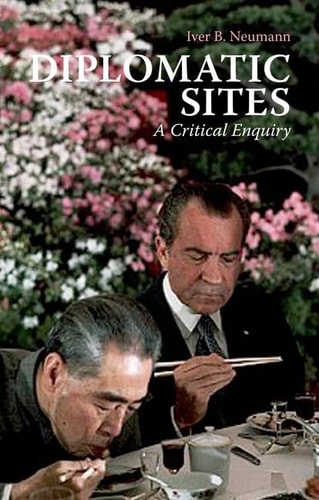
Although diplomacy increasingly takes place in non-traditional settings that are increasingly non-Western, our debates about diplomacy still focus on traditional points of contact such as the conference table, the ministerial office and the press conference. This book is framed as a discussion on whether increasing globalisation and the rise of powers such as China, India and Brazil will precipitate a crisis in diplomacy; it also tackles the problem of diplomatic Eurocentrism head on. The author, who has broad working experience of diplomacy, reflects on sites that range from the dining table--a quotidian and elementary meeting place where all kinds of business is settled amid a variety of culturally specific but little-known practices--via the civil-war interstices where diplomats from third parties try to facilitate and mediate conflict, to grand diplomatic extravaganzas, the object of which is to overwhelm the other party. In a media age, popular understanding of diplomacy is a force to be reckoned with, hence the book discusses how diplomacy is represented in an almost wholly overlooked space, namely that of popular culture. The author concludes that, far from being in crisis, diplomatic activity is increasingly in evidence in a variety of sites. Rather than being a dying art, in today's globalized world it positively thrives.
Menrva's Summary
THE THESIS
Does the shift toward non-Western and non-traditional diplomatic settings indicate a terminal crisis for the practice of diplomacy in a globalized era? Iver B. Neumann, drawing on his extensive professional background in diplomatic practice, challenges the prevailing Eurocentric focus of international relations theory. He argues that diplomacy is not declining but is instead diversifying, manifesting in a wide array of quotidian and unconventional spaces that have been largely ignored by traditional academic discourse.
THE SCOPE MAP
What You Will Find
- Analysis of non-traditional diplomatic sites including dining tables, civil-war zones, and popular culture representations.
- A critique of Eurocentrism within the study and practice of international diplomacy.
- Examination of the impact of emerging powers like China, India, and Brazil on global diplomatic norms.
- Theoretical framework for understanding diplomacy as a thriving, adaptable activity rather than a static, dying art.
THE AUTHORITY PERSPECTIVE
Experts in international relations frequently cite this work as a necessary intervention for expanding the spatial understanding of diplomatic practice. Readers often note the author's ability to bridge the gap between high-level political theory and the practical, everyday realities of diplomatic engagement.
Page Count:
176
Publication Date:
2013-03-01
Publisher:
Oxford University Press
ISBN-10:
0199327963
ISBN-13:
9780199327966
Sociology
International relations
Globalization
Diplomacy
Community Tags
Similar Books