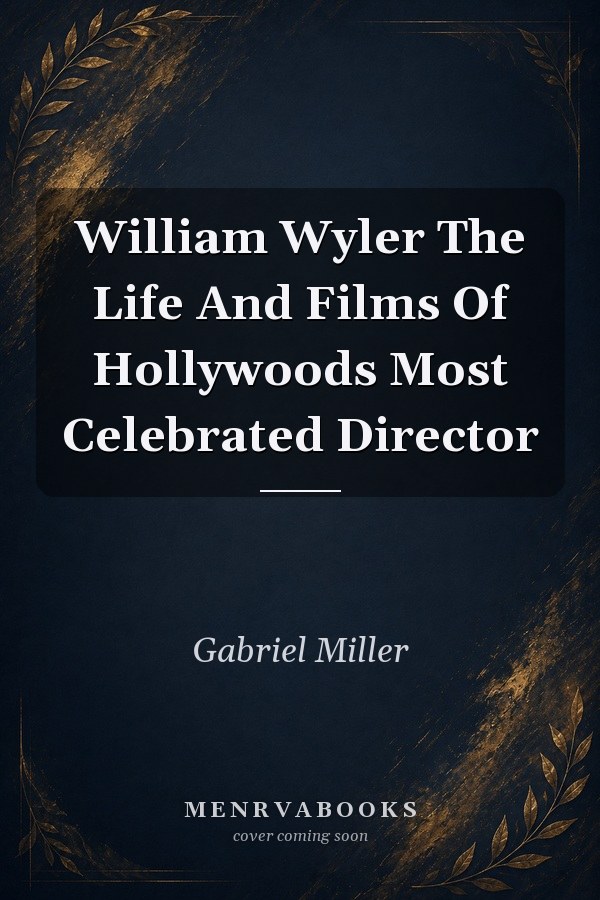
William Wyler: The Life and Films of Hollywood's Most Celebrated Director
0
0
As an Amazon Associate and affiliate partner, Menrva Books earns from qualifying purchases. Learn more
Author Description
During his forty-five-year career, William Wyler (1902--1981) pushed the boundaries of filmmaking with his gripping storylines and innovative depth-of-field cinematography. With a body of work that includes such memorable classics as Jezebel (1938), Mrs. Miniver (1942), Ben-Hur (1959), and Funny Girl (1968), Wyler is the most nominated director in the history of the Academy Awards and bears the distinction of having won an Oscar for Best Director on three occasions. Both Bette Davis and Lillian Hellman considered him America's finest director, and Sir Laurence Olivier said he learned more about film acting from Wyler than from anyone else. In William Wyler, Gabriel Miller explores the career of one of Hollywood's most unique and influential directors, examining the evolution of his cinematic style. Wyler's films feature nuanced shots and multifaceted narratives that reflect his preoccupation with realism and story construction. The director's later works were deeply influenced by his time in the army air force during World War II, and the disconnect between the idealized version of the postwar experience and reality became a central theme of Wyler's masterpiece, The Best Years of Our Lives (1946). None of Wyler's contemporaries approached his scope: he made successful and seminal films.
Menrva's Summary
THE THESIS
William Wyler's prolific career as a director is examined, focusing on his innovative techniques and enduring impact on Hollywood cinema. Gabriel Miller delves into the life and work of William Wyler, a filmmaker renowned for his gripping narratives and pioneering use of depth-of-field cinematography. The book explores Wyler's evolution as a director, highlighting his preoccupation with realism and complex storytelling, evident in classics like Jezebel, Mrs. Miniver, Ben-Hur, and Funny Girl. Miller analyzes how Wyler's experiences during World War II influenced his later films, particularly The Best Years of Our Lives, which grappled with the post-war disconnect between idealism and reality. The study positions Wyler as a uniquely influential figure, celebrated for his ability to create both successful and seminal cinematic works.
THE SCOPE MAP
- Exploration of William Wyler's forty-five-year filmmaking career.
- Analysis of his innovative depth-of-field cinematography.
- Examination of memorable films including Jezebel, Mrs. Miniver, Ben-Hur, and Funny Girl.
- Discussion of Wyler's record as the most nominated director in Academy Awards history and his three Best Director Oscars.
- Insights into Wyler's cinematic style, characterized by nuanced shots and multifaceted narratives.
- Influence of Wyler's World War II service on his post-war films, focusing on themes of realism versus idealized experiences.
- Consideration of Wyler's status as one of Hollywood's most celebrated and influential directors.
THE AUTHORITY PERSPECTIVE
Gabriel Miller's biography of William Wyler is presented as a comprehensive exploration of the director's career and cinematic style. The book highlights Wyler's critical acclaim, evidenced by his numerous Academy Award nominations and wins, and his reputation among peers like Bette Davis and Lillian Hellman, who considered him America's finest director. Miller's analysis focuses on Wyler's dedication to realism and his sophisticated narrative construction, particularly noting the impact of his wartime experiences on his later works. The study underscores Wyler's significant contribution to cinema, emphasizing his success in creating both popular and artistically significant films.
Page Count:
483
Publication Date:
2013-01-01
ISBN-10:
0813142091
ISBN-13:
9780813142098
Biography
Non-Fiction
Filmmaking
Hollywood
Film History
Community Tags
Similar Books