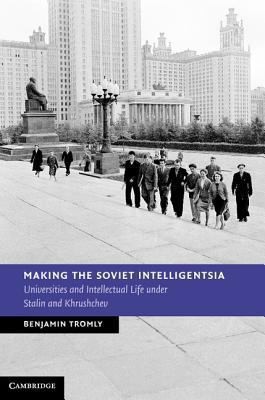
Making the Soviet Intelligentsia: Universities and Intellectual Life Under Stalin and Khrushchev
0
0
As an Amazon Associate and affiliate partner, Menrva Books earns from qualifying purchases. Learn more
Author Description
Making the Soviet Intelligentsia explores the formation of educated elites in Russian and Ukrainian universities during the early Cold War. In the postwar period, universities emerged as training grounds for the military-industrial complex, showcases of Soviet cultural and economic accomplishments and valued tools in international cultural diplomacy. However, these feted Soviet institutions also generated conflicts about the place of intellectuals and higher learning under socialism. Disruptive party initiatives in higher education - from the xenophobia and anti-Semitic campaigns of late Stalinism to the rewriting of history and the opening of the USSR to the outside world under Khrushchev - encouraged students and professors to interpret their commitments as intellectuals in the Soviet system in varied and sometimes contradictory ways. In the process, the social construct of intelligentsia took on divisive social, political and national meanings for educated society in the postwar Soviet state.
Menrva's Summary
THE THESIS
This book investigates the complex role of universities in shaping the Soviet intelligentsia during the early Cold War. It examines how institutions of higher learning, crucial for the military-industrial complex and international cultural diplomacy, also became sites of conflict regarding the place of intellectuals and higher education within socialism. The narrative details how party initiatives, ranging from late Stalinist xenophobia and anti-Semitism to Khrushchev's historical revisions and increased global engagement, prompted diverse and sometimes contradictory interpretations of intellectual commitment among students and professors, ultimately leading to divisive social, political, and national meanings for the educated class in the postwar Soviet state.
THE SCOPE MAP
- Analysis of Russian and Ukrainian universities as training grounds for the military-industrial complex.
- Exploration of universities as showcases of Soviet cultural and economic achievements.
- Examination of universities as tools in international cultural diplomacy.
- Discussion of conflicts arising from the place of intellectuals and higher learning under socialism.
- Case studies of disruptive party initiatives in higher education during late Stalinism and the Khrushchev era.
- Analysis of xenophobia and anti-Semitic campaigns impacting academic life.
- Investigation into the rewriting of history and the opening of the USSR to the outside world.
- Exploration of how these factors led to varied and contradictory interpretations of intellectual commitment.
THE AUTHORITY PERSPECTIVE
This scholarly work is recognized for its detailed examination of the formation of educated elites in Soviet universities during a critical period. The book's strength lies in its analysis of how political initiatives shaped intellectual life, leading to complex social and national meanings for the intelligentsia. It is noted for its nuanced portrayal of the contradictions inherent in higher education under Soviet rule, offering insights into the period's ideological struggles. The research provides a valuable contribution to understanding the social and political landscape of the early Cold War Soviet Union.
Page Count:
295
Publication Date:
2013-01-01
ISBN-10:
1107031109
ISBN-13:
9781107031104
Non-Fiction
History
Education
Social History
Community Tags
Similar Books