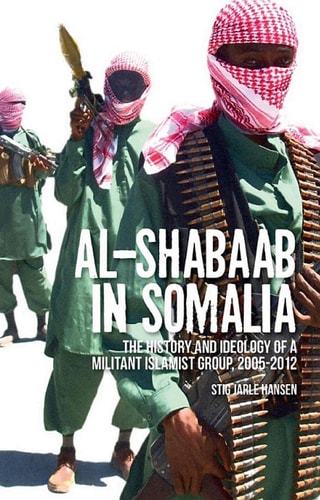
Al-Shabaab in Somalia: The History and Ideology of a Militant Islamist Group
0
0
As an Amazon Associate and affiliate partner, Menrva Books earns from qualifying purchases. Learn more
Author Description
Since early 2007 a new breed of combatants has appeared on the streets of Mogadishu and other towns in Somalia: the 'Shabaab', or youth, the only self-proclaimed branch of al-Qaeda to have gained acceptance (and praise) from Ayman al-Zawahiri and 'AQ centre' in Afghanistan. Itself an offshoot of the Islamic Courts Union, which split in 2006, Shabaab has imposed Sharia law and is also heavily influenced by local clan structures within Somalia itself. It remains an infamous and widely discussed, yet little-researched and understood, Islamist group. Hansen's remarkable book attempts to go beyond the media headlines and simplistic analyses based on alarmist or localist narratives and, by employing intensive field research conducted within Somalia, as well as on the ground interviews with Shabaab leaders themselves, explores the history of a remarkable organisation, one that has survived predictions of its collapse on several occasions. Hansen portrays al-Shabaab as a hybrid Islamist organization that combines a strong streak of Somali nationalism with the rhetorical obligations of international jihadism, thereby attracting a not insignificant number of foreign fighters to its ranks. Both these strands of Shabaab have been inadvertently boosted by Ethiopian, American and African Union attempts to defeat it militarily, all of which have come to nought.
Menrva's Summary
THE THESIS
This book investigates the origins, ideological evolution, and operational resilience of al-Shabaab within the complex socio-political landscape of Somalia. Stig Jarle Hansen, a scholar specializing in political Islam and conflict, utilizes extensive field research and primary interviews with group leadership to challenge simplistic media narratives. He argues that the organization functions as a hybrid entity, effectively synthesizing local clan-based Somali nationalism with the global rhetoric of international jihadism to maintain its influence.
THE SCOPE MAP
What You Will Find
- Historical analysis of the Islamic Courts Union and the subsequent emergence of al-Shabaab in 2006.
- Examination of the interplay between local clan dynamics and global Islamist ideology.
- Primary source data derived from direct interviews with militant leadership and on-the-ground field research.
- Assessment of the strategic failures of international military interventions by Ethiopia, the United States, and the African Union.
THE AUTHORITY PERSPECTIVE
Experts recognize this work as a critical, evidence-based study that moves beyond alarmist reporting to provide a nuanced view of militant organizational structures. Readers frequently note the academic rigor and the author's ability to synthesize complex regional history into a coherent political framework.
Page Count:
209
Publication Date:
2013-01-01
Publisher:
Oxford University Press
ISBN-10:
019936530X
ISBN-13:
9780199365302
History
Islam And Politics
African history
Islamic Studies
Terrorism
Somalia
Insurgency
Politics & Government
International relations
Community Tags
Similar Books