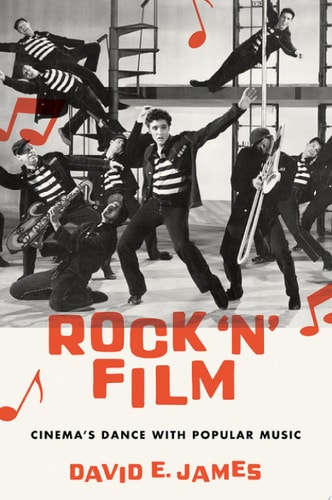
Rock 'n' Film
0
0
As an Amazon Associate and affiliate partner, Menrva Books earns from qualifying purchases. Learn more
Author Description
For Two Decades After The Mid-1950s, Biracial Popular Music Played A Fundamental Role In Progressive Social Movements On Both Sides Of The Atlantic. Balancing Rock's Capacity For Utopian Popular Cultural Empowerment With Its Usefulness For The Capitalist Media Industries, Rock 'n' Film Explores How The Music's Contradictory Potentials Were Reproduced In Various Kinds Of Cinema, Including Major Studio Productions, Minor Studios' Exploitation Projects, Independent Documentaries, And The Avant-garde. These Include Rock Around The Clock And Other 1950s Jukebox Musicals; The Films Elvis Made Before Being Drafted, Especially King Creole, As Well As The Formulaic Comedies In Which Hollywood Abused His Genius In The 1960s; Early Documentaries Such As The T.a.m.i. Show That Presented James Brown And The Rolling Stones As The Core Of A Black-white, Us-uk Cultural Commonality; A Hard Day's Night That Marked The British Invasion; Dont Look Back, Monterey Pop, Woodstock, And Other Direct Cinema Documentaries About The Music Of The Counterculture; And Avant-garde Films About The Rolling Stones By Jean-luc Godard, Kenneth Anger, And Robert Frank. After The Turn Of The Decade, Notably Gimme Shelter, In Which The Stones Appeared To Be Complicit In The Hells Angels' Murder Of A Young Black Man, 1960s' Music-and Films About It-reverted To Separate Black And White Traditions Based Respectively On Soul And Country. These Produced Blaxploitation And Lady Sings The Blues On The One Hand, And Bigoted Representations Of Southern Culture In Nashville On The Other. Ending With The Deaths Of Their Stars, Both Films Implied That Rock 'n' Roll Had Died Or Even, As David Bowie Proclaimed, That It Had Committed Suicide. But In His Documentary About Bowie, Ziggy Stardust And The Spiders From Mars, D.a. Pennebaker Triumphantly Re-affirmed The Community Of Musicians And Fans In Glam Rock. In Analyzing This History, David E. James Adapts The Methodology Of Histories Of The Classic Film Musical To Show
Menrva's Summary
THE THESIS
This book investigates how the contradictory potentials of rock music—balancing utopian cultural empowerment with capitalist media exploitation—were manifested and reproduced within various cinematic forms between the mid-1950s and the mid-1970s. David E. James, a scholar of film and cultural history, utilizes a methodology adapted from the study of classic film musicals to examine the intersection of biracial popular music and progressive social movements. By analyzing a wide range of studio productions, exploitation films, and avant-garde works, James argues that cinema served as a primary site for negotiating the racial and political tensions inherent in the rock era.
THE SCOPE MAP
What You Will Find
- Analysis of 1950s jukebox musicals and the evolution of Elvis Presley's Hollywood film career.
- Examination of direct cinema documentaries including 'Monterey Pop', 'Woodstock', and 'Dont Look Back'.
- Discussion of avant-garde interpretations of rock culture by filmmakers such as Jean-Luc Godard and Kenneth Anger.
- Evaluation of the shift from biracial musical commonality to the segregated traditions of Blaxploitation and Southern-themed cinema in the 1970s.
THE AUTHORITY PERSPECTIVE
Scholars and film historians frequently cite this work for its rigorous application of film theory to the history of popular music. Experts highlight the text as a foundational resource for understanding how the visual language of cinema shaped the public perception of rock and roll during its most transformative decades.
Page Count:
504
Publication Date:
2015-01-01
Publisher:
Oxford University Press
ISBN-10:
0199387613
ISBN-13:
9780199387618
Music
Cinema
Rock music
Film History
Documentary
Community Tags
Similar Books