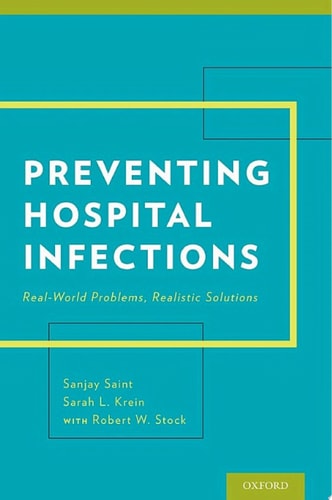
Preventing Hospital Infections: Real-World Problems, Realistic Solutions
0
0
As an Amazon Associate and affiliate partner, Menrva Books earns from qualifying purchases. Learn more
Author Description
Nearly 2 million Americans develop a healthcare-associated infection each year, and some 100,000 of them die as a result. Such infections are highly preventable, particularly through the adoption and implementation of evidence-based methods for reducing patient infection at the point of care. In cases where hospitals fall short of their goals for improving infection prevention, their failures are often rooted in a low rate of staff adherence to the new prevention policies.In easy-to-read, user-friendly language, Preventing Hospital Infections leads readers through a step-by-step description of a quality improvement intervention as it might unfold in a model hospital, pinpointing the likely obstacles and offering practical strategies for how to overcome them. The text draws on the extensive personal clinical experience of the authors, including examples, anecdotes, and down-to-earth, practical guidance.Whereas most books focus on the technical aspects of healthcare-associated infections, this book offers the first manual for effecting real, practical change. Whether resistance comes from physicians who distrust change, nurses who want to protect their turf, or infection preventionists who avoid the wards, Preventing Hospital Infections offers an innovative and accessible approach that focuses on navigating the human element in a hospital quality improvement initiative.
Menrva's Summary
THE THESIS
This book investigates the persistent challenge of healthcare-associated infections and the critical role of staff adherence in successful prevention initiatives. The authors, a team of clinicians and researchers, utilize their extensive experience to argue that technical knowledge alone is insufficient for hospital safety. They present a practical framework for navigating the complex human dynamics and organizational resistance that often impede the implementation of evidence-based infection control protocols.
THE SCOPE MAP
What You Will Find
- A step-by-step model for quality improvement interventions within a hospital setting.
- Strategies for overcoming resistance from diverse medical staff, including physicians and nurses.
- Analysis of the human element in clinical environments and its impact on policy adoption.
- Practical guidance based on clinical anecdotes and real-world hospital scenarios.
THE AUTHORITY PERSPECTIVE
Experts and practitioners value this text for its focus on the behavioral and organizational aspects of infection control rather than purely technical data. It is frequently cited as a useful manual for hospital administrators and quality improvement teams seeking to bridge the gap between policy and practice.
Page Count:
176
Publication Date:
2014-01-01
Publisher:
Oxford University Press
ISBN-10:
0199398852
ISBN-13:
9780199398850
Professional Development
Allied Health
Medicine
Management
Healthcare
Medical
Public Health
Community Tags
Similar Books