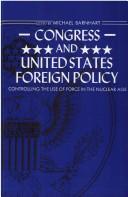
Congress and United States Foreign Policy: Controlling the Use of Force in the Nuclear Age
0
0
As an Amazon Associate and affiliate partner, Menrva Books earns from qualifying purchases. Learn more
Author Description
Author description coming soon. We're reaching out to them in the ether...
Menrva's Summary
THE THESIS
This book investigates the complex and often contentious relationship between the United States Congress and the executive branch in shaping foreign policy, particularly concerning the control of military force in the nuclear age. Michael A. Barnhart, drawing on his expertise in American political history, examines the constitutional powers and practical limitations faced by Congress in asserting its oversight role. The work analyzes historical precedents and theoretical frameworks to understand how legislative bodies can influence, and at times constrain, presidential decisions on the use of armed conflict, especially in the context of nuclear deterrence and potential escalation.
THE SCOPE MAP
- Analysis of the constitutional framework defining Congress's role in foreign policy and war powers.
- Examination of historical instances where Congress has influenced or challenged presidential decisions on military intervention.
- Discussion of the unique challenges posed by nuclear weapons to traditional legislative oversight of foreign policy.
- Exploration of the interplay between domestic politics and international relations in congressional foreign policy decision-making.
THE AUTHORITY PERSPECTIVE
The book is recognized as a significant academic contribution to the study of American foreign policy and the separation of powers. Scholars in political science and history have noted its detailed examination of congressional influence and the challenges of controlling the use of force. The work is considered a valuable resource for understanding the historical evolution of legislative-executive relations in foreign affairs, particularly during the Cold War and the nuclear era. Its analysis provides a crucial perspective on the institutional dynamics that shape U.S. national security decisions.
Page Count:
196
Publication Date:
1987-01-01
ISBN-10:
0887064655
Politics
History
Non-Fiction
Science
International relations
Foreign Policy
American Politics
Community Tags
Similar Books