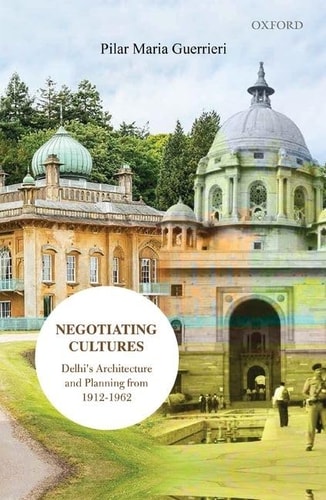
Negotiating Cultures: Delhi's Architecture and Planning from 1912 to 1962
0
0
As an Amazon Associate and affiliate partner, Menrva Books earns from qualifying purchases. Learn more
Author Description
This work is about the city of Delhi and its architectural and urban design styles from 1912, when the British Town Planning Committee for New Delhi was formed, to 1962, when the first Master plan was implemented. It examines, from a historical perspective - the process of hybridisation between cultures, local architecture, and urban planning. The work analyses architectural elements of the city of Delhi, to understand how foreign developmental models were indigenized, the resistance encountered in the process, and finally their adaptation to local architectural contexts. Used as a case study, the city of Delhi enables the author to explore the initial transition period when the mega-city was born and provides a crucial starting point to investigate the processes of globalization and urbanization. The major emphasis of this work is to reveal the underlying social relations emerging from the constant flux in style of architecture and its related elements in an urbanized area. The author deals with the complexities of 'multiple Delhis' with different or simultaneous pasts as well as with the various ways those pasts have been interpreted or contextualised, offering fresh insight into what is now happening in Delhi's built environment.
Menrva's Summary
THE THESIS
This work investigates how Delhi’s architectural and urban landscape evolved through the hybridization of colonial developmental models and local cultural contexts between 1912 and 1962. Pilar Maria Guerrieri, an expert in architectural history, utilizes historical analysis to trace the transition of Delhi from a colonial administrative center to a modernizing mega-city. The book argues that the built environment serves as a physical manifestation of complex social relations, documenting how foreign planning frameworks were indigenized or resisted over five decades.
THE SCOPE MAP
What You Will Find
- Historical analysis of Delhi's urban development from the formation of the British Town Planning Committee to the 1962 Master Plan.
- Examination of the hybridization process between colonial architectural styles and indigenous building traditions.
- Case study methodology focusing on the adaptation of foreign developmental models to local contexts.
- Investigation into the social and political implications of urban planning and the concept of 'multiple Delhis'.
THE AUTHORITY PERSPECTIVE
Scholars and urban historians identify this text as a significant contribution to the study of post-colonial urbanism and the architectural evolution of South Asian cities. Readers frequently note the academic density of the prose, which provides a rigorous framework for understanding the intersection of globalization and local urban identity.
Page Count:
350
Publication Date:
2018-05-01
Publisher:
Oxford University Press
ISBN-10:
0199479585
ISBN-13:
9780199479580
Architecture
History
India
urban planning
Delhi India
City Planning
Architecture india
Urban Studies
Community Tags
Similar Books