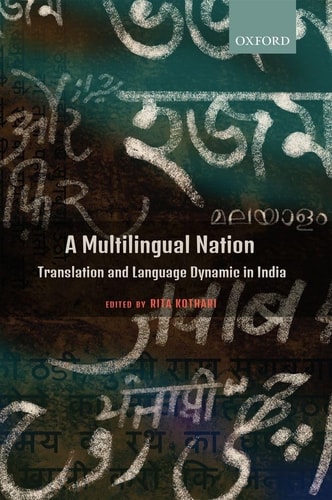
A Multilingual Nation: Translation and Language Dynamic in India
0
0
As an Amazon Associate and affiliate partner, Menrva Books earns from qualifying purchases. Learn more
Author Description
This anthology takes head on some of the cardinal principles of translation and illustrates how they do not apply to India. The idea of 'source' - the language and text you translate from - is in a multilingual society slippery and protean, refusing to be confined to any one language. This experience comes to us in this anthology not only from translation theorists, and practitioners, but also from philosophers, historians, and other social scientists. In that sense, the anthology demonstrates the all-pervasive nature of translation in every sphere in India, and in the process it overturns the assumptions of even the steady nature of language, its definition, and the peculiar fragility that is revealed in the process of translation. The anthology provocatively asks if multilingualism in India is itself a translation, an act not an outcome.
Menrva's Summary
THE THESIS
This anthology investigates whether the traditional principles of translation are applicable within the complex, multilingual framework of Indian society. Rita Kothari, a scholar of translation and cultural studies, compiles a diverse range of perspectives from theorists, practitioners, philosophers, and historians to challenge the Western-centric definition of a 'source' text. The work argues that in India, translation is not merely a linguistic task but an all-pervasive social act that reveals the inherent fluidity and fragility of language itself.
THE SCOPE MAP
What You Will Find
- Theoretical critiques of translation principles applied to non-Western contexts
- Multidisciplinary essays from philosophers, historians, and social scientists
- Analysis of the protean nature of language in a multilingual society
- Exploration of whether Indian multilingualism functions as an ongoing act rather than a static outcome
THE AUTHORITY PERSPECTIVE
Scholars and students of translation studies frequently cite this text for its ability to deconstruct rigid academic assumptions regarding language boundaries. Experts highlight this anthology as a necessary intervention for those studying the intersection of post-colonial identity and linguistic practice in South Asia.
Page Count:
352
Publication Date:
2018-02-28
Publisher:
Oxford University Press
ISBN-10:
0199478775
ISBN-13:
9780199478774
Linguistics
Sociology
Translation Studies
Translating and interpreting
India
Community Tags
Similar Books