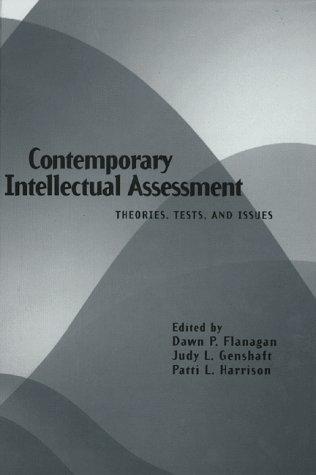
Contemporary Intellectual Assessment: Theories, Tests, and Issues
0
0
As an Amazon Associate and affiliate partner, Menrva Books earns from qualifying purchases. Learn more
Author Description
In recent years, traditional theories of intelligence and measures of intellectual functioning have come under increased scrutiny by professionals seeking a broader understanding of cognitive abilities and personal competence, enhanced diagnostic and treatment utility, and a more culturally sensitive practice. Many new assessment instruments and techniques have been developed and new and revised theories of intelligence have emerged. This unique volume provides a comprehensive conceptual and practical overview of the current state of the art of the field. Bridging the gap between applied intelligence testing and the latest in cognitive science, the book covers major theories of intelligence, methods of assessing human cognitive abilities, and issues related to the validity and utility of current test batteries. Contributors, who include leading theorists researchers, and scientist-practitioners, as well as many of the test developers themselves, give special attention to ways in which emerging conceptions of intelligence diverge from traditional paradigms. Taken together, the chapters provide the knowledge needed to effectively use new batteries and to make up-to-date, empirically supported interpretations of older tests.
Menrva's Summary
THE THESIS
This volume addresses the evolving landscape of intellectual assessment in response to increased scrutiny of traditional theories and measures. The book bridges applied intelligence testing with cognitive science, covering major theories of intelligence, methods of assessing cognitive abilities, and issues of test validity and utility. It highlights how emerging conceptions of intelligence diverge from traditional paradigms, offering insights for effective use of new assessment batteries and updated interpretations of older tests.
THE SCOPE MAP
- Major theories of intelligence, including those that diverge from traditional paradigms.
- Methods and techniques for assessing human cognitive abilities.
- Issues related to the validity and utility of current intelligence test batteries.
- Contributions from leading theorists, researchers, and scientist-practitioners, including test developers.
- Focus on culturally sensitive practices and broader understandings of cognitive abilities and personal competence.
THE AUTHORITY PERSPECTIVE
The book is presented as a comprehensive overview of the state of the art in intellectual assessment, aiming to equip professionals with knowledge for contemporary practice. Its contributors, including test developers, suggest a focus on empirically supported interpretations and the integration of new conceptions of intelligence. The framing implies a text intended for practitioners and researchers seeking to update their understanding and diagnostic tools in the field.
Page Count:
597
Publication Date:
1996-01-01
ISBN-10:
1572301473
ISBN-13:
9781572301474
History
Non-Fiction
Psychology
Testing
Community Tags
Similar Books